

Master Demolition Safety — Start Today

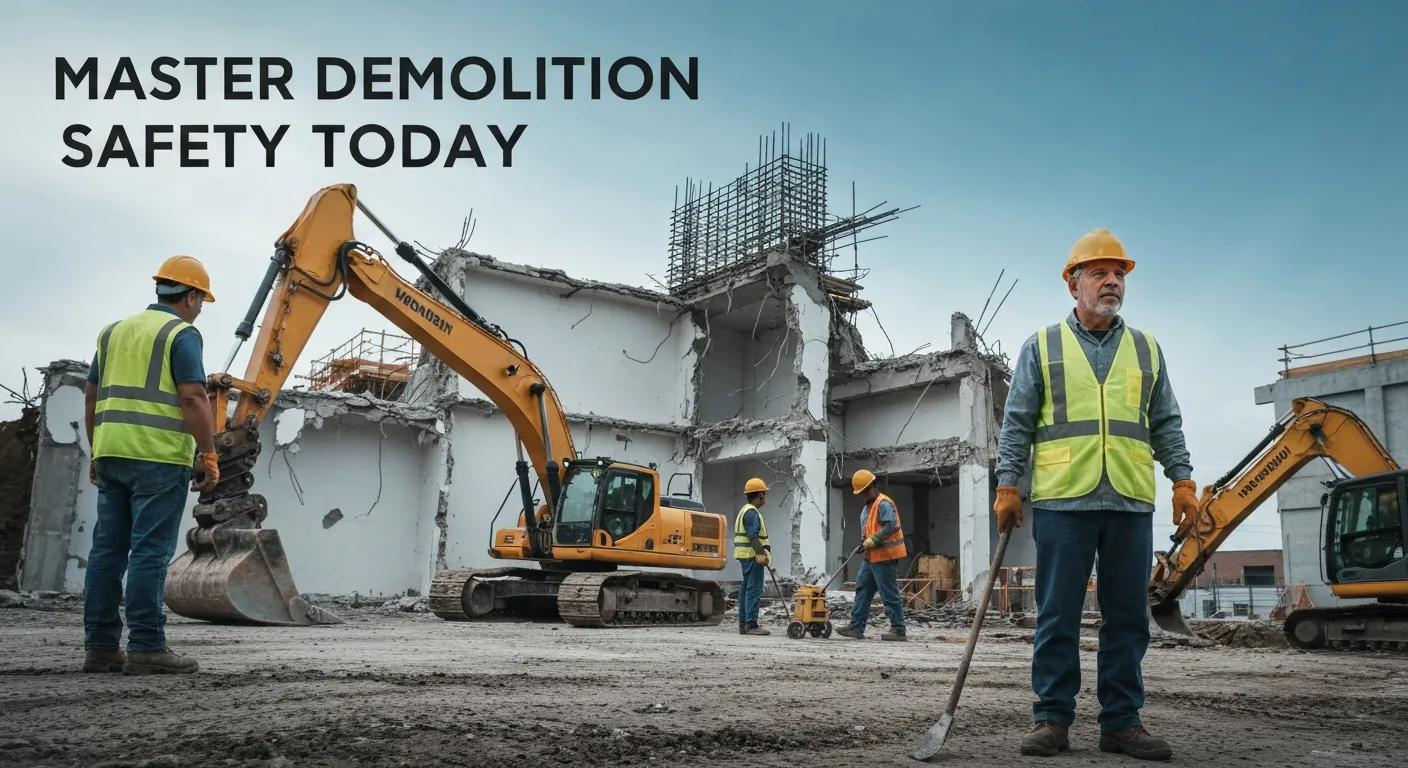
Demolition safety means protecting people, nearby property, and the environment while removing parts of — or entire — structures. Avoiding common mistakes lowers injury risk, prevents regulatory fines, and keeps projects on schedule. Knowing how incidents happen — whether from missing permits, live utilities, hidden hazardous materials, or poor debris control — lets teams put targeted protections in place. This guide gives practical prevention steps, clear checklists, and local permitting guidance for Davie and Broward County so you can plan safer residential and commercial demolitions. Inside you’ll find a prioritized list of frequent mistakes to avoid, a Davie-focused permitting comparison, best practices for identifying and abating hazards, proven demolition methods, required PPE and site protocols, plus debris-management and greener disposal options. Each section includes actionable lists and tables so you can apply these controls on real projects, cut liability, and get better results.
What Are the Most Common Demolition Safety Mistakes to Avoid?
Most demolition incidents trace back to gaps in pre-demolition planning — underestimating regulatory, structural, or hazardous-material risks exposes workers, neighbors, and the project to harm and delay. Common failures include skipping permits, missing utility verifications, and skipping hazardous-material surveys. Addressing these weak points improves site control, reduces emergency exposure, and helps preserve insurance coverage. Below is a concise, prioritized checklist to help contractors and owners spot immediate fixes and build a defensible demolition plan.
The top five demolition safety mistakes are:
- Skipping permits and approvals, which can void inspections and insurance coverage.
- Neglecting utility disconnection and verification, which risks electrocution or gas events.
- Failing to identify hazardous materials like asbestos or lead before demolition.
- Insufficient structural assessment and planning, which can cause unplanned collapses or debris hazards.
- Poor debris and site management, creating trip, puncture, and environmental risks.
These frequent errors show where planning needs the most attention. The next section explains the legal and safety consequences of skipping permits and how to prevent that mistake.
Why Skipping Permits Puts Your Demolition Project at Risk
Working without required permits removes an important layer of oversight that enforces inspections, safety conditions, and environmental safeguards. Unpermitted work can trigger stop-work orders, fines, and costly remedial actions — and insurers often deny claims for incidents on unpermitted sites. The practical fix is to identify jurisdictional permit requirements early, file documentation before disruptive work starts, and bake permit milestones into your pre-demolition schedule so inspections and controls align with project phases. That approach lowers the chance of enforcement actions and reduces liability.
How Neglecting Utility Disconnection Leads to Dangerous Accidents
Live utilities are immediate, high-consequence hazards: energized electrical systems can electrocute, and pressurized gas lines can cause explosions. Utility verification is non-negotiable. Confirm disconnections with utility providers, secure written verification when available, and use lockout/tagout procedures coordinated with licensed technicians. A practical checklist includes locating all service entries, confirming permits or tags, documenting confirmations, and maintaining exclusion zones during demolition. Clear utility coordination reduces accidental energization and leaves a documented trail for inspectors and insurers.
After outlining common mistakes and their consequences, the best safeguard is working with experienced demolition contractors who follow formal processes and know local requirements. Miller & Myers Group Demolition is a licensed, insured full-service demolition contractor serving Miami-Dade and Broward Counties (including Davie). We handle residential and commercial jobs — full-structure, interior selective, concrete, pool demolition, and land clearing — and integrate permitting support, hazardous-material handling, and advanced methods that reduce neighborhood disruption and keep projects compliant. Hiring pros familiar with local codes cuts the risk of skipped permits, missed utilities, and improper hazardous-material handling.
How Do You Navigate Demolition Permits and Regulations in Davie, FL?
Demolition permits in Davie, FL are the formal approvals that ensure work meets building, environmental, and public-safety standards. Permitting requires documentation, inspections, and sometimes environmental clearance depending on scope. Securing the right permits reduces legal exposure, schedules inspections, and ensures hazardous materials and debris are handled correctly — all of which protect workers and the public. This section lays out the typical permits you may need in Davie, where to submit them, and how to sequence applications so your project stays compliant and on time.
Below is a practical permit comparison showing when each permit typically applies and where to submit for Davie and Broward County projects.
| Permit Type | When Required | Typical Issuing Office / Note |
|---|---|---|
| Demolition Permit | Required for full-structure and many partial demolitions | Town of Davie Building Division; submit with site plan and contractor information |
| Hazardous Abatement Permit | Required if asbestos, lead, or other regulated hazards are present | Florida Department of Environmental Protection and Broward County Environmental Protection & Growth Management; requires a licensed abatement contractor |
| Site Work / Land Clearing Permit | Required for land clearing, grading, or erosion control | Broward County Environmental Protection & Growth Management or the municipal site-development office |
| Utility Disconnection Approvals | Required before disruptive demolition that severs services | Issued by utility providers and municipal inspectors; documentation is often required with permit applications |
This table clarifies common permit triggers and submission offices. The next section explains how to prepare complete applications and get ready for inspections.
What Permits Are Required for Safe Demolition in Davie, FL?
Most Davie projects need a demolition permit for structural work, with additional permits when hazardous materials or extensive site work are involved. Each approval typically requires plans, contractor licensing, and waste-disposal details. Use a pre-submittal checklist that includes hazardous-material survey results, proof of contractor licensing, utility-disconnect confirmations, and a waste-management plan. Processing times vary by complexity, so coordinate with agencies early to avoid delays. Complete, well-documented applications reduce back-and-forth and help keep your schedule intact.
How to Ensure Compliance with Davie and Broward County Demolition Codes
Compliance starts with organized documentation, scheduled inspections, and following permit conditions — which may include dust control, noise mitigation, and neighbor notifications. Integrate code requirements into daily site protocols and your permit checklist. Practical steps include an inspection schedule tied to demolition milestones, a record of permit communications, and crew training on environmental protections and permit conditions. Common violations—poor hazardous-material handling, inadequate erosion control, and missing utility verifications—are preventable when you address them proactively. For owners and contractors who need help, Miller & Myers Group Demolition provides local permit coordination and compliance support to streamline approvals and reduce administrative risk.
Before moving on to hazardous-material abatement, pause to confirm permits and utility shutdowns — that sequencing is essential for safe, compliant abatement and demolition.
What Are the Best Practices for Hazardous Material Removal During Demolition?
Hazardous-material removal is about identifying, containing, and legally disposing of materials such as asbestos, lead paint, and mold so demolition doesn’t create airborne or environmental exposure. The workflow includes pre-demolition surveys, licensed abatement, and regulated disposal chains. Following established abatement procedures reduces worker exposure, community risk, and regulatory penalties while keeping your schedule intact. Below is a comparative table for common hazardous materials and a stepwise abatement approach to follow before and during demolition.
The following table lists common hazardous materials and key planning attributes.
| Material | Risk Level | Required Certification / Disposal Method |
|---|---|---|
| Asbestos | High — respiratory and long-term health risks | Licensed asbestos abatement contractor; regulated disposal per EPA and Florida DEP rules |
| Lead Paint | Chronic toxicity, especially for children | Certified lead abatement or stabilization; disposal according to local hazardous-waste rules |
| Mold | Respiratory irritation and contamination spread | Remediation by trained professionals; containment and moisture control required |
| PCBs / Other Chemical Residues | Environmental contamination and reporting obligations | Specialized hazardous-waste handling and delivery to permitted disposal facilities |
Use this table to prioritize testing and abatement. Next, follow a stepwise workflow to reduce exposure during demolition.
How to Identify and Safely Remove Asbestos, Lead, and Other Hazardous Materials
Start with a pre-demolition hazardous-material survey performed by qualified assessors who sample and send material to a lab to confirm concentrations. When hazards are confirmed, follow regulated abatement protocols: set up containment, use negative-pressure systems with HEPA filtration, provide decontamination stations, and require certified personnel with proper respirators. Maintain chain-of-custody documentation and waste manifests for disposal at permitted facilities. These steps protect workers, the public, and the project schedule by preventing uncontrolled contamination during demolition.
Study of Safety in Building Demolition: Hazards and Worker Training
Common hazards include falls, being struck by falling objects, and sudden building collapse. Exposure to dust, chemicals, noise, and unstable structures also poses significant occupational health risks. Comprehensive training—covering job safety, competency checks, and proper PPE—reduces those risks by ensuring workers understand hazards and controls.
What Protective Equipment and Procedures Are Essential for Hazardous Material Handling?
Handling hazardous materials requires specialized PPE and engineering controls to prevent inhalation, skin contact, and spread of contamination. Combine fit-tested respiratory protection, impermeable protective clothing, and controlled work zones with continuous air monitoring. For asbestos and lead work, use P100 respirators or supplied-air systems, disposable coveralls with taped seams, certified gloves, and eye protection, plus strict decontamination routines. Regular air monitoring and clearance testing confirm controls are effective before demolition resumes. Training and documented procedures complete the control package for safe, compliant abatement.
Below is an explicit inventory of PPE items and their protection roles to guide selection and maintenance.
| PPE Item | Protection Type | Use-Case / Maintenance |
|---|---|---|
| Respirator (P100 or supplied air) | Respiratory protection | Required for asbestos/lead work; perform fit-testing and track cartridge replacements |
| Disposable coveralls | Skin and clothing barrier | Single-shift use in abatement zones; dispose properly to avoid cross-contamination |
| Protective gloves | Hand protection | Chemical- and tear-resistant gloves matched to contaminants; replace when damaged or soiled |
| Eye protection | Eye splash and dust prevention | Safety goggles or face shields during dust-generating tasks; inspect and clean daily |
Following these PPE selections and maintenance routines supports safe hazardous-material handling and prepares the site for controlled demolition.
How Can You Plan and Execute Safe Residential and Commercial Demolition Practices?
Effective planning starts with a structured pre-demolition assessment covering utilities, structural stability, hazardous materials, access, and neighbor impacts. Turn assessment findings into a written demolition plan that assigns roles, sequences work, and defines controls. That plan helps you choose the right method — selective interior deconstruction, mechanical demolition, or full-structure removal — and specifies shoring, exclusion zones, and traffic controls. Below is a planning checklist and a comparison of demolition techniques to help select the safest approach for residential and commercial sites.
A concise pre-demolition planning checklist highlights what crews must document before starting work.
- Site Survey and Documentation: Map utilities, access points, and adjacent structures.
- Structural Assessment and Shoring Plan: Engineer-reviewed analysis for load-bearing elements and temporary supports.
- Permits, Notifications, and Utility Verifications: Secure approvals and written confirmation of disconnections.
- Hazardous-Material Survey and Abatement Plan: Record findings and schedule abatement before demolition.
- Traffic, Noise, and Neighbor Communication Plan: Minimize disruption and document notifications.
This checklist builds a defensible project record and reduces surprises during execution. Next we compare demolition techniques and their safety trade-offs.
What Are the Key Steps in Pre-Demolition Planning and Structural Assessment?
Key steps include a detailed site walk, engaging a structural engineer to evaluate load paths, mapping utilities, and producing a sequence-of-work plan that coordinates abatement, utility shutdowns, and demolition phases. A shoring and temporary-support plan prevents progressive collapse and must align with the demolition sequence to retain structural control. Clear communication protocols — neighbor notices, traffic control, and on-site signage — reduce public risk and legal exposure. Built-in inspection checkpoints and contingency plans ensure that unexpected conditions trigger assessment and controlled responses rather than ad-hoc fixes.
Which Controlled Demolition Techniques Minimize Safety Hazards?
Controlled techniques differ in risk and precision: selective deconstruction removes interior elements to limit structural disturbance; mechanical demolition with excavators and shears offers control on open sites; remote-controlled or robotic tools reduce worker exposure in confined or hazardous areas. The trade-off is speed versus precision — selective methods are slower but limit dust and uncontrolled collapse, while mechanical approaches are faster but require robust exclusion zones and dust controls. For high-rise or sensitive sites, remote or specialized methods can significantly lower exposure and neighborhood impacts.
What Safety Equipment and Protocols Are Essential on Demolition Sites?
Essential equipment and protocols combine PPE, engineering controls, and administrative practices like daily briefings and permit-linked inspections. This layered approach addresses immediate hazards and builds repeatable safe-work behaviors. Implement fall protection, dust suppression, exclusion zones, and lockout/tagout to reduce incidents and meet OSHA and local code expectations. Below is a practical PPE table followed by protocol guidance to simplify selection and site controls for crews.
The following table matches common PPE items to the hazards they address and includes brief maintenance notes.
| PPE Item | Protection | OSHA / Practical Notes |
|---|---|---|
| Hard hat | Impact protection | Required in falling-object zones; inspect for cracks and replace per manufacturer guidance |
| Respirator | Inhalation protection | Fit-tested respirators for dust/asbestos; keep cartridge-change logs |
| Safety boots | Foot and puncture protection | Steel-toe, puncture-resistant soles for debris fields; clear embedded nails from soles |
| High-visibility apparel | Traffic and equipment visibility | Required when heavy equipment operates near public roads; replace faded garments |
This table helps match PPE to site hazards. Below are key site protocols that, paired with PPE, reduce incident rates.
Which Personal Protective Equipment Is Required for Demolition Workers?
Standard PPE includes a hard hat, puncture-resistant safety boots, eye protection, and appropriate respiratory protection for dust or hazardous-material exposures. PPE choice should match hazards identified in the pre-demolition survey — for example, specialized respirators or supplied-air systems for asbestos work — and crews must follow manufacturer and regulatory guidance for fit-testing and upkeep. A program of inspection, replacement, and hands-on training keeps PPE effective and ensures crews use it correctly through every demolition phase.
How Do Safety Protocols Prevent Common On-Site Injuries and Accidents?
Protocols like lockout/tagout for utilities, clearly marked exclusion zones, spotters during equipment moves, and daily toolbox talks create behavioral controls that prevent struck-by incidents, utility strikes, and falls. Predictable routines and documented confirmations reduce human error: daily briefings align crews on hazards, written checklists verify lockout steps, and spotters manage equipment blind spots. Regular incident reporting and near-miss reviews create continuous improvement loops that lower injury rates across projects.
Before moving to debris management, confirm your crew consistently runs briefings, practices lockout/tagout, and uses spotters so PPE works as intended on-site.
How Should You Manage Debris and Post-Demolition Cleanup to Maintain Safety?
Debris management combines sorting, safe transport, and environmentally responsible disposal to protect people and meet regulations. Separate recyclables from hazardous waste, stabilize the site to prevent erosion, and take steps to limit fugitive dust and contaminants. Effective debris strategies reduce landfill use, recover material value, and prepare the parcel for the next phase. Below is a disposal-mapping table and a short post-demolition checklist to hand off a safe, documented site.
The following table maps common demolition waste types to recommended disposal or recycling pathways.
| Waste Type | Disposal / Recycling Pathway | Site Action |
|---|---|---|
| Concrete | Recycle into aggregate or send to a concrete recycling facility | Crush on-site if permitted or segregate for transport |
| Metal | Recycle through scrap-metal processors | Separate ferrous and non-ferrous metals to recover value |
| Treated Wood / Mixed Debris | Landfill or specialized processing per local rules | Sort contaminated wood and handle separately |
| Hazardous Waste (asbestos, lead) | Transport to a permitted hazardous-waste facility with manifests | Maintain chain-of-custody and full documentation |
These pathways support sustainable choices while meeting regulatory obligations. Next, follow the post-demolition checklist to close out the site safely.
What Are Effective Debris Removal and Eco-Friendly Disposal Practices?
Start debris removal with on-site sorting to keep concrete, metal, wood, and hazardous materials separate so recycling streams aren’t contaminated. Plan for concrete crushing or off-site recycling, contract with local metal processors, and prepare manifests for hazardous-waste transport to permitted facilities. Use dust suppression during load-out, cover loads in transit, and document disposal destinations to demonstrate environmental compliance. These measures reduce environmental impact and improve safety during cleanup.
How to Prepare the Site Safely After Demolition Completion?
Post-demolition steps include a final hazardous-material sweep, grading for stability, installing erosion control, and compiling clearance certifications for permit closeout. Confirm removal of debris hazards, secure openings, install temporary fencing if needed, and assemble inspection reports and waste manifests for client handover. A formal sign-off verifies permit conditions, environmental protections, and safety cleanups are complete before releasing the site for reconstruction or sale. Thorough documentation supports compliance and reduces downstream liability.
For fence installation in Port St. Lucie or help with demolition permits and safety, consider Miller & Myers Group Demolition — licensed and insured in Miami-Dade and Broward Counties (including Davie). We handle residential, commercial, selective, concrete, and pool demolition and provide hazardous-material handling and permitting support. Request a quote to discuss how our team can coordinate permits, abatement, and debris management to keep your project safe, compliant, and on schedule.
Frequently Asked Questions
What should I consider when hiring a demolition contractor?
Check experience, licensing, and insurance first. Choose contractors who’ve done similar work locally and who can show references and past project outcomes. Confirm they understand local codes, provide a clear safety plan, and include timelines and itemized costs so you avoid surprises.
How can I ensure the safety of my neighbors during a demolition project?
Communicate the schedule and expected disruptions in advance. Use dust-suppression measures, secure fencing, and clear exclusion zones to prevent unauthorized access. Post signage and keep neighbors updated on progress and any changes to the timeline to maintain transparency.
What are the environmental considerations for demolition projects?
Key considerations are hazardous-material identification and proper disposal, dust and runoff control, and recycling of concrete and metal. Proper sorting and handling reduce contamination risk and landfill volume. An environmental assessment helps identify site-specific issues and compliance requirements.
What training is required for demolition workers?
Workers need training in site safety, equipment operation, hazardous-material handling, and emergency response. Training should include PPE use, job-specific hazard recognition, and periodic refresher courses and competency checks to keep safety standards high.
How can I manage noise and dust during demolition?
Use water sprays or dust-control agents, schedule noisy work during less disruptive hours, and erect barriers or enclosures to contain dust and noise. Monitor dust levels and adjust controls to meet local regulations and protect nearby residents.
What are the legal implications of improper demolition practices?
Improper practices can lead to fines, stop-work orders, lawsuits, and costly cleanup obligations. Failing to obtain permits or mishandling hazardous materials increases liability and can affect insurance coverage. Following regulations and best practices is essential to reduce legal and financial risk.
What steps should I take after demolition is complete?
Conduct a final site inspection to ensure debris removal and proper hazardous-waste disposal. Install erosion control, compile waste manifests and inspection reports, and submit required documentation to close permits. Confirm with local authorities that all conditions are met before handing the site back or moving to reconstruction.
Conclusion
Good demolition safety protects workers, neighbors, and the environment while keeping projects on track. By recognizing common mistakes and following proven practices — from permits and utility verification to hazardous-material abatement, controlled demolition methods, and responsible debris handling — you can lower risk and improve outcomes. For hands-on help with permits, abatement, and safe execution, contact Miller & Myers Group Demolition. We’ll partner with you to keep your project safe, compliant, and efficient.