

Commercial vs Residential Demolition: Essential Differences and Cost Insights for Davie Clients
Demolition is a foundational step in the construction and renovation processes for both residential homes and commercial businesses. Understanding the complexities and specifics involved can help ensure projects run smoothly, stay within budget, and comply with all legal requirements. This comprehensive guide delves into the key distinctions between commercial and residential demolition practices, equipment needs, permitting processes, timelines, cost factors, and environmental regulations specifically geared toward clients in Davie, FL, to provide authoritative insights and practical guidance.
Key Differences Between Commercial and Residential Demolition
The essential distinctions lie in the scale of the project, regulatory requirements, safety protocols, and overall cost structure, all of which are crucial considerations within the Davie, FL market.
- Permit Requirements and Regulatory Compliance: Commercial demolition projects generally require more extensive permitting, including environmental impact assessments and strict adherence to OSHA regulations, while residential demolitions often have a simpler permit process. The town of Davie enforces these regulations rigorously to ensure community safety.
- Project Scale and Complexity: Commercial buildings tend to be larger with complex structural components, requiring advanced engineering analysis, whereas residential demolitions typically involve smaller-scale structures, often allowing for expedited processes.
- Cost Drivers and Budget Considerations: Due to the increased labor, equipment, safety standards, and regulatory demands, commercial demolition usually commands higher costs per square foot compared to residential projects. Clients in Davie, FL, benefit from understanding these factors to optimize budgeting and avoid unforeseen expenses.
Being aware of these differences enables property owners and developers to make informed decisions, ensure compliance, and optimize project planning with trusted local experts.
Differences in Commercial and Residential Demolition Processes
The demolition approach is shaped by project scope, safety standards, and environmental considerations, all of which are particularly prominent in the Davie landscape.
- Safety and Regulatory Frameworks: Commercial projects mandate comprehensive safety plans, regular inspections, and stricter hazard controls aligned with federal and local regulations, which are strictly enforced in Davie to protect workers and residents alike.
- Methodologies and Techniques Employed: Residential demolitions often use smaller-scale or partially manual methods such as hand demolition or light machinery, while commercial projects utilize heavy-duty equipment like excavators, wrecking balls, and high-reach machines. These techniques directly impact project scheduling and environmental footprint.
- Project Timelines and Scheduling: Due to more complex coordination, including utility disconnections, hazardous material removal, and environmental safeguards, commercial demolitions typically require longer completion periods compared to residential demolitions. Clients in Davie should anticipate and plan timelines accordingly for seamless project flow.
Effective timeline management aligned with these differences helps avoid project delays and cost overruns.
Specialized Equipment and Contractors for Commercial and Residential Demolition
The choice of equipment and professional contractors must correspond to the specific demands of the demolition project and comply with Davie’s local regulations.
- Machinery Suited for Commercial vs Residential Demolition: Commercial jobs require heavy machinery such as hydraulic excavators, bulldozers, cranes, and specialized concrete crushers. Residential sites often deploy skid-steer loaders, mini-excavators, and manual tools to accommodate space limitations and reduce disturbance, especially in dense residential areas of Davie.
- Contractor Qualifications and Licensing: Commercial demolition companies must have specialized certifications including hazardous-material handling and environmental compliance credentials. Residential contractors, while also licensed, may focus more on local building codes and safety standards relevant to homes in the area.
- Impact of Equipment on Project Costs and Efficiency: Advanced and specialized equipment increases upfront costs but enhances operational safety, speed, and precision, thus potentially lowering overall project duration and risk. This balance is a key consideration for Davie contractors and clients alike.
Engaging qualified demolition contractors equipped with appropriate machinery is critical for minimizing risks and ensuring timely completion.
Demolition Permits in Davie, FL
Property owners in Davie, FL, must navigate intricate local permit regulations to secure legal clearance and avoid project interruptions.
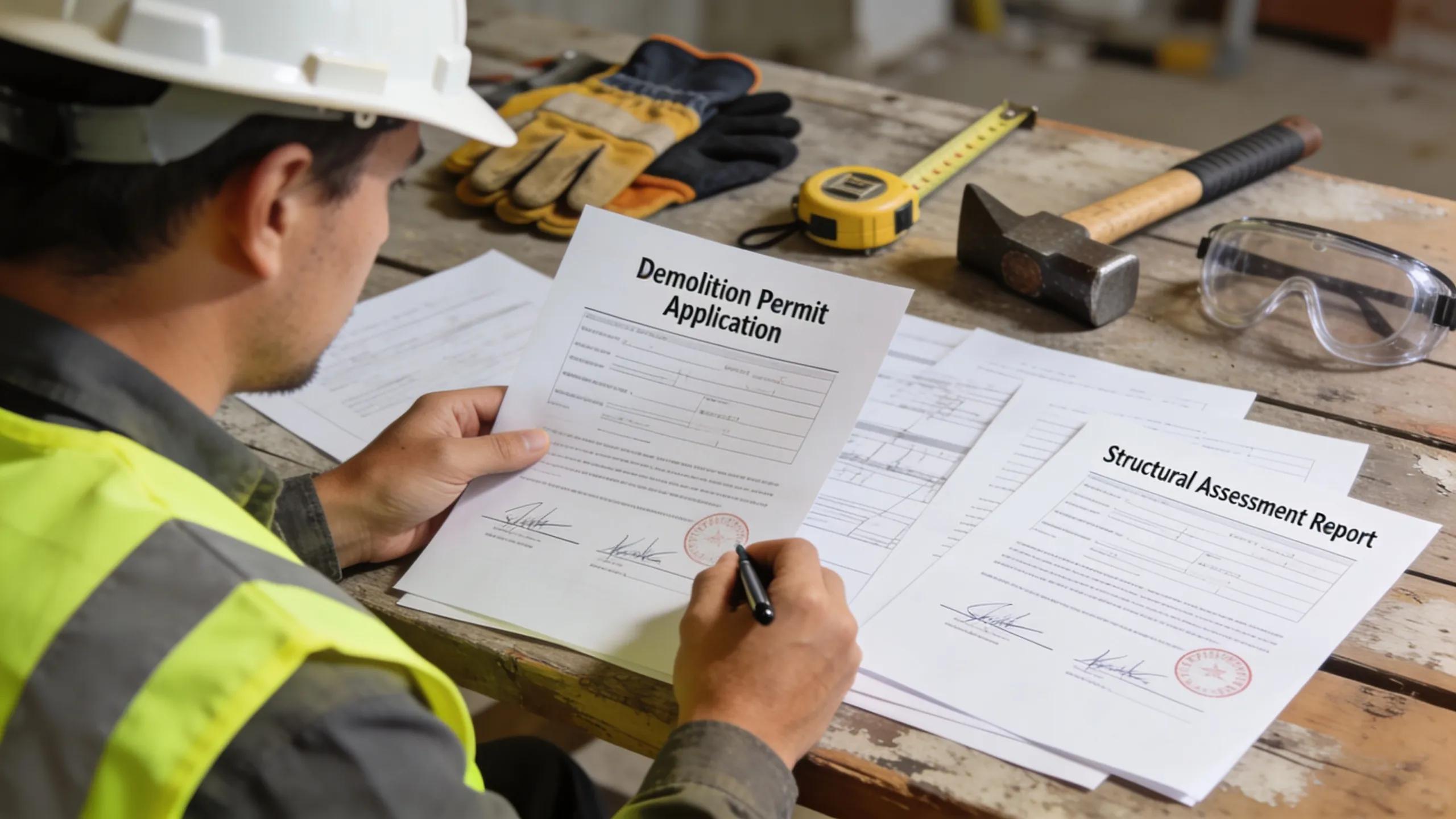
- Comprehensive Permitting Procedures: Both commercial and residential projects require submitting detailed applications including site plans, demolition scopes, and environmental impact documents tailored to Davie’s municipal mandates. Davie’s municipal offices provide guidance and checklists to assist applicants.
- Required Documentation: Standard documentation encompasses structural assessments, environmental hazard reports (for asbestos, lead paint, mold), waste disposal plans, and proof of contractor licensing, ensuring thorough compliance with local and state regulations.
- Typical Permit Approval Timelines: Permitting can take from several weeks to months depending on project size, complexity, and local authority workload. Early application submission is advisable in Davie to account for these timelines.
Proactively preparing and thoroughly reviewing application materials enhances the likelihood of timely permit approvals and project initiation.
Demolition Permit Requirements for Commercial and Residential Projects
Permit requirements vary significantly based on project scope, structural impact, and local regulations in Davie, FL; proceeding without required permits can lead to costly fines and forced work stoppages.
- Scenarios Mandating Permits: Any demolition affecting structural components, utilities, or involving hazardous materials necessitates a permit. Minor, non-structural residential work may sometimes be exempt but should be verified with Davie’s local authorities to ensure compliance.
- Application Processing Durations: Commercial project permits typically undergo additional reviews including environmental and safety audits, extending processing times relative to residential permits.
- Consequences of Unauthorized Demolition: Non-compliance can result in significant legal penalties, project delays, financial liabilities, and potential damage to property value, risks that property owners in Davie must avoid.
Confirming permit obligations early is essential to prevent legal complications and financial penalties.
Navigating Local Permit Regulations for Safe and Legal Demolition in Davie, FL
Understanding and following local rules, coupled with expert guidance, simplifies the permitting process for Davie clients.
- Initial Site and Environmental Assessments: Comprehensive evaluations may be required to identify environmental hazards and structural conditions prior to permit applications, ensuring safety and legal adherence.
- Essential Documentation Collection: Accurate gathering of demolition plans, environmental assessments, utility disconnection agreements, and compliance certifications expedite approvals and reduce processing delays.
- Utility Disconnection Coordination: Scheduling and verifying disconnection of gas, electricity, water, and telecommunications is a critical safety and regulatory step, often coordinated with Davie’s utility providers.
Adhering to these practices mitigates risks and fosters regulatory compliance for smooth project delivery.
Demolition Cost Calculations and Factors Affecting Pricing Per Square Foot
Demolition costs depend on a variety of factors including project scale, site conditions, structural materials, and site accessibility, particularly within the Davie, FL market.
- Common Cost Per Square Foot Ranges: Residential demolition typically ranges from $4 to $15 per square foot, while commercial demolition can range from $8 to $20 or more per square foot depending on complexity and regional economic factors affecting Davie.
- Key Cost Influencers: Site preparation, hazardous material removal, labor skill level, equipment utilization, waste disposal fees, and permit costs collectively influence pricing.
- Comparative Costs: Commercial vs Residential: Commercial demolitions incur higher costs due to larger scale, more stringent safety requirements, and complex logistics, emphasizing the importance of precise budgeting in Davie projects.
Requesting detailed, itemized quotes from local professionals helps ensure transparent budgeting and financial planning.
Factors Influencing Commercial and Residential Demolition Costs in Davie
Local market forces, regulatory environments, and logistical challenges shape overall demolition expenses in Davie.
- Market Demand and Labor Availability: High construction activity increases labor rates and equipment rental costs, influencing local pricing. Davie’s growing development landscape can affect demand and availability.
- Regulatory and Inspection Fees: Regional safety, environmental, and permit-related expenses can add considerable cost, particularly for commercial projects due to enhanced oversight.
- Site Accessibility and Geographic Factors: Locations with limited access or challenging terrain require additional labor and specialized machinery, driving up costs. In suburban areas of Davie, space constraints may dictate equipment choices and pricing.
Incorporate these local dynamics into comprehensive project estimates to avoid budget shortfalls.
Impact of Selective Demolition and Asbestos Removal on Overall Price
Selective demolition techniques and hazardous material abatement introduce substantial complexities and costs to demolition projects in Davie.
- Selective Demolition Costs: Precision deconstruction to salvage materials or protect adjacent structures requires skilled labor and extended timelines, increasing expenses but offering environmental and material reuse benefits.
- Asbestos and Hazardous Material Removal Expenses: Asbestos abatement is rigorously regulated and costly, often representing a significant per-square-foot surcharge contingent on material scope and containment measures, especially important compliance considerations in Davie.
- Regulatory and Compliance Considerations: Hazardous material handling demands additional permits, inspections, and certified contractors, elevating project fees and emphasizing the need for professional management.
Early identification and planning for hazardous materials reduce unexpected financial and scheduling impacts and enhance project safety.
Influence of Environmental Compliance and Safety Standards on Demolition Projects in Davie
Strict adherence to Davie regulations is imperative to ensure sustainable and safe demolition operations.
- Environmental Law Compliance: Mandated recycling of concrete, metals, and wood, along with proper disposal of hazardous waste, minimize environmental footprints and legal risks, reflecting Davie’s commitment to sustainability.
- Enhanced Safety Protocols: Requirements include protective gear, site security, dust and noise control, and emergency response planning to safeguard workers and the public.
- Risks of Non-compliance: Failure to meet standards can result in substantial fines, legal action, project delays, and damage to professional reputations, underscoring the importance of adherence in Davie projects.
Prioritizing regulatory compliance fosters successful project delivery and community goodwill in Davie.
Latest Environmental Regulations for Demolition Waste Management in Davie
Recent legislative updates emphasize responsible waste handling to support sustainability goals integral to Davie’s environmental policies.
- Debris Sorting and Waste Reduction Policies: Laws require segregation of recyclable materials such as concrete, asphalt, metal, and untreated wood to reduce landfill use, with stringent enforcement in Davie.
- Recycling and Disposal Protocols: Permitted recycling centers and approved disposal sites must be utilized in compliance with Davie mandates, ensuring environmentally responsible processing.
- Erosion and Sediment Control Measures: Projects must implement effective erosion control to protect waterways and soil during demolition activities, a critical environmental safeguard for the region.
Following these updated regulations benefits the environment and ensures regulatory approval.
Importance of Safety Training and Certified Contractors for Effective Demolition in Davie
Utilizing certified demolition contractors and investing in ongoing safety training are essential best practices that directly impact project outcomes in Davie.
- Advantages of Hiring Certified Contractors: Professional contractors undergo rigorous training, adhere to industry standards, and maintain insurance coverage, enhancing accountability and project safety.
- Continual Safety Training Benefits: Regular employee training ensures updated knowledge on hazard recognition, emergency response, and equipment operation, reducing accident rates and promoting a culture of safety.
- Positive Effects on Project Timelines and Liability: Well-trained teams minimize delays caused by accidents or regulatory violations and reduce financial and legal liabilities, streamlining projects in the Davie construction environment.
Verifying licenses, certifications, and training records prior to contract signing is a critical due diligence step to ensure quality and compliance.
Frequently Asked Questions
1. What is the typical timeline for a demolition project in Davie?
Demolition project durations vary based on size, complexity, and permitting requirements. Small residential demolitions may be completed within days to weeks, whereas large commercial demolitions can extend over several months, particularly when environmental remediation is involved. Early inclusion of permit processing times in schedules is essential for accurate planning in Davie, FL.
2. How can I ensure my demolition project in Davie is environmentally friendly?
Implement sustainable practices such as maximum material recycling, responsible hazardous waste management, erosion control, and selecting contractors experienced in green demolition technology to minimize environmental impact and align with Davie’s environmental standards.
3. Are there specific insurance requirements for demolition projects in Davie?
Yes, standard requirements typically include general liability insurance, workers’ compensation, and pollution liability coverage. Additional insurance may be mandated based on project scope and local regulations in Davie.
4. What types of hazardous materials should I be aware of before demolition in Davie?
Common hazardous materials include asbestos-containing materials, lead-based paint, mold, polychlorinated biphenyls (PCBs), and other toxic substances. Conducting an environmental site assessment prior to demolition is crucial for identification and safe handling, in compliance with Davie regulations.
5. How can I minimize dust and noise during the demolition process in Davie?
Apply dust suppression techniques such as water spraying, use noise barriers or enclosures, schedule disruptive work during regulated hours, and utilize quieter equipment models to limit community impact, which is particularly important in residential areas of Davie.
6. What are the best practices for site cleanup after demolition in Davie?
Thoroughly remove debris and hazardous waste, recycle salvageable materials, conduct site inspections, and prepare for subsequent construction or landscaping activities to ensure safety and compliance with Davie standards.
7. How can I choose the right demolition contractor for my project in Davie?
Evaluate contractors based on licenses, insurance coverage, relevant certifications, proven experience, client references, and competitive, detailed quotes. Prioritize those demonstrating commitment to safety and environmental compliance within the Davie, FL community.
Conclusion
Developing a deep understanding of the differences between commercial and residential demolition empowers property owners, developers, and contractors to optimize project planning, safety adherence, and budget management. Carefully considering permitting requirements, appropriate equipment, environmental and safety regulations, and selecting certified professionals ensures a smooth, compliant demolition process tailored to the needs of Davie, FL clients. Engaging experts and adopting best practices mitigates risks and enhances successful project outcomes in this dynamic field.