

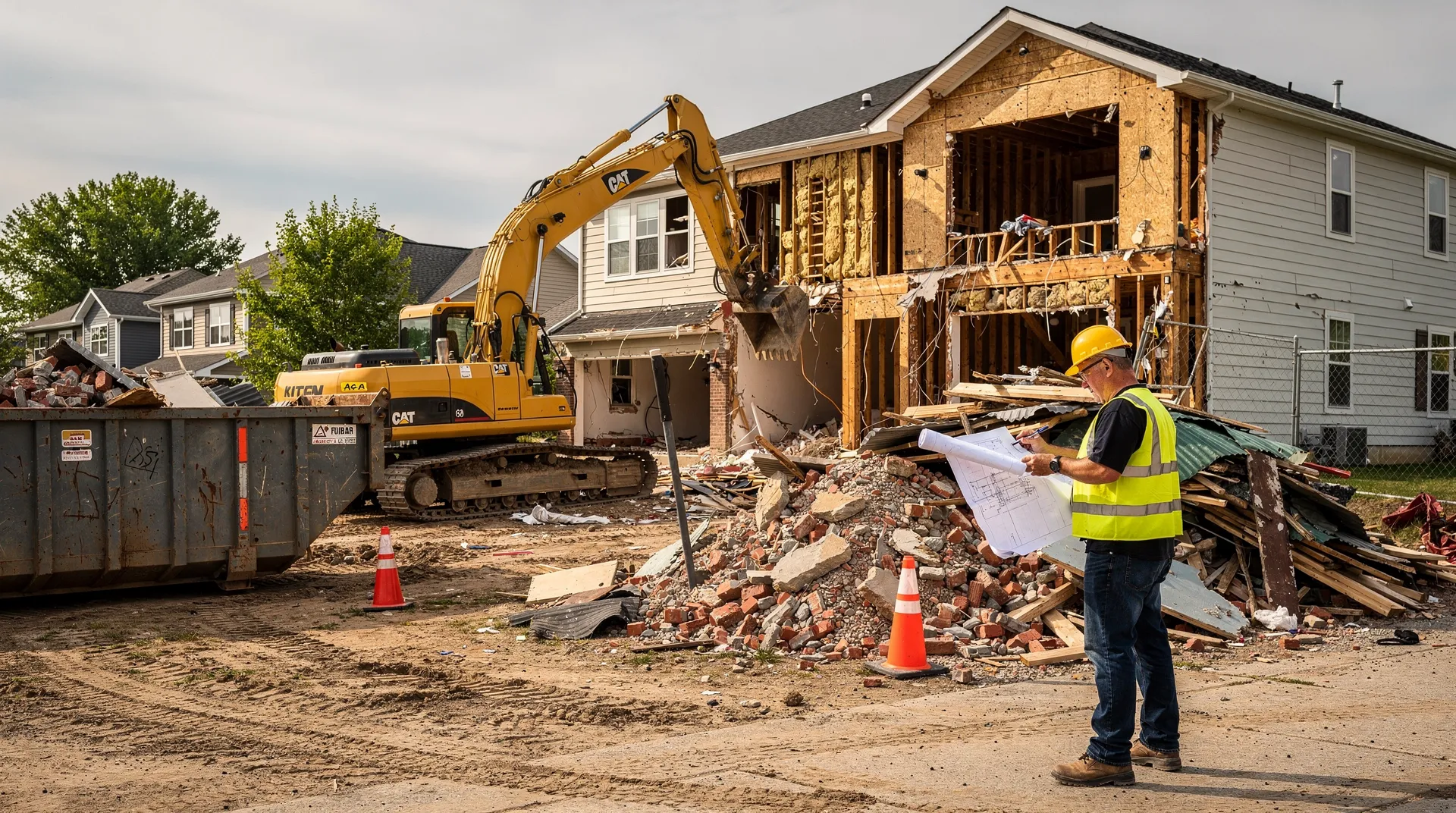
How to Budget for Your Demolition Project
Budgeting for a demolition project starts with obtaining multiple contractor quotes, setting aside a contingency fund, and accounting for permit fees, debris removal, and hazardous material handling. Professionals like Miller & Myers Group Demolition in Cooper City, FL bring licensed, insured experience to every estimate, helping homeowners and developers plan accurately from day one.
Budgeting for a demolition project also means accounting for two distinct cost categories: pre-demolition expenses — including permits, asbestos abatement, and utility disconnections — and on-site demolition costs covering labor, equipment, and disposal fees. Florida-specific factors like local codes and site conditions in areas such as Cooper City further influence the final number, which is why an itemized, phase-by-phase estimate matters more than a single lump-sum figure.
Ultimately, an accurate demolition budget accounts for every cost phase — permits, labor, equipment, disposal, and cleanup. Project size, structure type, and site conditions all shift the final number, and Florida-specific factors, including hazardous material abatement, add further variables. Miller & Myers Group Demolition serves Miami-Dade and Broward County clients with free estimates that establish accurate, transparent budgets upfront, backed by a licensed and insured crew with a proven local track record.
Key Takeaways
Demolition costs vary significantly by structure type, requiring detailed assessment beyond square footage calculations.
Pre-demolition, during-work, and post-project expenses all factor into the total budget for any job.
Every building presents unique cost drivers that directly impact the final demolition project price.
Permits, hazardous material abatement, and site access conditions are among the biggest hidden cost swings in South Florida demolition projects.
Miller & Myers Group Demolition in Cooper City, FL helps clients understand all cost variables upfront through free, itemized estimates.
Demolition costs vary significantly by structure type, requiring detailed assessment beyond square footage calculations.
Pre-demolition, during-work, and post-project expenses all factor into the total budget for any job.
Every building presents unique cost drivers that directly impact the final demolition project price.
Permits, hazardous material abatement, and site access conditions are among the biggest hidden cost swings in South Florida demolition projects.
Miller & Myers Group Demolition in Cooper City, FL helps clients understand all cost variables upfront through free, itemized estimates.
Prerequisites to Gather Before Budgeting
Gathering the right information before committing to a demolition budget prevents costly surprises mid-project. Three core prerequisites shape every accurate estimate: structure classification, permit and code requirements, and a professional consultation.
Structure Type and the Cost of Demolition Projects in Cooper City
The type of structure — residential, commercial, or industrial — is the primary driver of cost variation between projects. A single-family home carries a fundamentally different scope than a multi-story commercial building, and interior demolition (gutting a space while leaving the shell intact) typically costs less than a full structural teardown. Clients must identify their structure classification before any reliable number can be attached to the work.
Permits and Pre-Demolition Steps Required
Pre-demolition requirements cover every step a local jurisdiction mandates before a structure can legally come down. These steps include securing permits and demonstrating compliance with local building codes, and — where applicable — completing a hazardous material (asbestos) survey before any physical work starts. Skipping this stage exposes property owners to stop-work orders and fines that inflate the final project cost well beyond the original estimate.
Before requesting an estimate, clients should gather:
Confirm the structure type and total square footage.
Contact the local building department to identify required permits.
Document any known site conditions, such as existing utilities or access restrictions.
Schedule a free consultation and estimate with Miller & Myers Group Demolition to scope the project transparently.
Confirm the structure type and total square footage.
Contact the local building department to identify required permits.
Document any known site conditions, such as existing utilities or access restrictions.
Schedule a free consultation and estimate with Miller & Myers Group Demolition to scope the project transparently.
Miller & Myers Group Demolition offers Demolition Equipment Cooper City for Local Projects, giving Cooper City clients a structured starting point before any budget commitment is made.
Cost Factors That Drive Your Demolition Budget
The cost of demolition projects in Cooper City depends on several well-defined variables that property owners and developers should evaluate before work begins. Building materials, permitting requirements, and site-specific conditions each shape the final budget in measurable ways, and demolition cost per square foot can vary widely depending on which of these factors apply.
The Role of Building Materials in Demolition Costs
Building materials directly determine labor intensity and equipment needs. Wood-frame and brick structures are generally less expensive to handle than reinforced concrete or steel, which is covered in more detail in Demolition Process Steps Cooper City | Efficient Demolition and typically require heavier machinery and more disposal effort. Clients planning to remove a concrete slab or a steel-framed commercial building should expect higher costs than those clearing a wood-frame residence.
Why Permits Affect the Demolition Budget
Permitting requirements are a non-negotiable cost factor in every demolition project. Cooper City and the broader Broward County area enforce local regulations that govern how structures are removed, what inspections are required, and how debris is managed. Failing to account for permitting fees early causes budget overruns and project delays — and in commercial demolition, permit costs and inspection timelines are typically higher than for residential work.
Key cost drivers to evaluate before requesting an estimate:
Structural materials (wood, brick, reinforced concrete, steel)
Permitting requirements specific to Cooper City and Broward County
Site access and preparation needs
Debris removal and disposal logistics
Hazardous material handling, such as asbestos abatement, when older structures are involved
Structural materials (wood, brick, reinforced concrete, steel)
Permitting requirements specific to Cooper City and Broward County
Site access and preparation needs
Debris removal and disposal logistics
Hazardous material handling, such as asbestos abatement, when older structures are involved
Miller & Myers Group Demolition is licensed and insured, with a documented track record of completing projects on time and on budget across Miami-Dade and Broward counties.
Finalizing and Protecting Your Demolition Budget
Finalizing a demolition budget requires a structured process that accounts for every project phase before work begins. Skipping any stage exposes clients to cost overruns that derail timelines and strain finances.
Miller & Myers Group Demolition follows a defined delivery process that moves clients through consultation, site preparation, estimating, safety planning, demolition execution, and thorough cleanup. Each phase surfaces costs early, so surprises stay off the final invoice.
Steps Clients Should Take to Lock In Their Budget
Schedule a consultation to define project scope and site conditions before any numbers are committed.
Request a detailed estimate that itemizes each phase — preparation, labor, equipment, and debris removal.
Confirm regulatory requirements specific to the project type, since commercial demolition carries different permitting obligations and cost structures than residential work.
Review the safety plan to ensure compliance costs are captured upfront, not added mid-project.
Clarify cleanup expectations so site-restoration costs appear in the original budget, not as a line-item surprise at closeout.
Schedule a consultation to define project scope and site conditions before any numbers are committed.
Request a detailed estimate that itemizes each phase — preparation, labor, equipment, and debris removal.
Confirm regulatory requirements specific to the project type, since commercial demolition carries different permitting obligations and cost structures than residential work.
Review the safety plan to ensure compliance costs are captured upfront, not added mid-project.
Clarify cleanup expectations so site-restoration costs appear in the original budget, not as a line-item surprise at closeout.
How Project Type Affects Budget Protection Strategies
Commercial and residential demolition differ in scale, regulatory requirements, and overall cost structure — and those differences shape how budgets are built and protected. A commercial teardown in Cooper City demands more permitting coordination than a residential job and changes the pre-demolition cost picture entirely.
The cost of demolition projects in Cooper City stays manageable when clients partner with a full-service team. Miller & Myers Group Demolition’s experienced crew works efficiently without compromising safety, supporting on-time, on-budget delivery across South Florida communities.
Budgeting for demolition requires honest assessment of your project’s scope, site conditions, and local requirements — factors that directly shape your final costs. By gathering detailed estimates, understanding what’s included in each quote, and planning for contingencies, you position yourself for a smoother project from start to finish. The investment in thorough upfront planning pays dividends when your demolition stays on schedule and within budget, clearing the way for your next phase of construction or development.
FAQ
What are the two main cost categories in a demolition budget?
Pre-demolition expenses — including permits, asbestos abatement, and utility disconnections — and on-site costs covering labor, equipment, and disposal fees make up the two distinct categories.
What information do I need before requesting a demolition estimate?
Confirm the structure type and total square footage, identify required permits from the local building department, and document site conditions such as existing utilities or access restrictions.
Does Miller & Myers Group Demolition offer estimates before I commit to a budget?
Miller & Myers Group Demolition in Cooper City, FL offers free consultations and estimates, giving clients a structured starting point before any budget commitment is made.
How much does demolition cost per square foot in Cooper City, FL?
Demolition cost per square foot in the Cooper City area typically depends on structure type, materials, and site access, with residential wood-frame homes generally costing less to remove than concrete or steel commercial buildings. Miller & Myers Group Demolition provides a free, itemized estimate so property owners can see the actual per-square-foot breakdown for their specific project.
How long does a residential demolition project take in South Florida?
Most residential demolitions in the Cooper City area take one to three days once permits are secured, though asbestos abatement or utility disconnections can extend the timeline. Miller & Myers Group Demolition maps out a project schedule during the consultation so clients know what to expect before work begins.
Do I need a permit to demolish a building in Broward County?
Yes — Broward County and Cooper City both require permits before any residential or commercial demolition can legally proceed, and commercial projects often involve additional inspections. Miller & Myers Group Demolition helps clients identify and secure the correct permits as part of its full-service demolition process.