

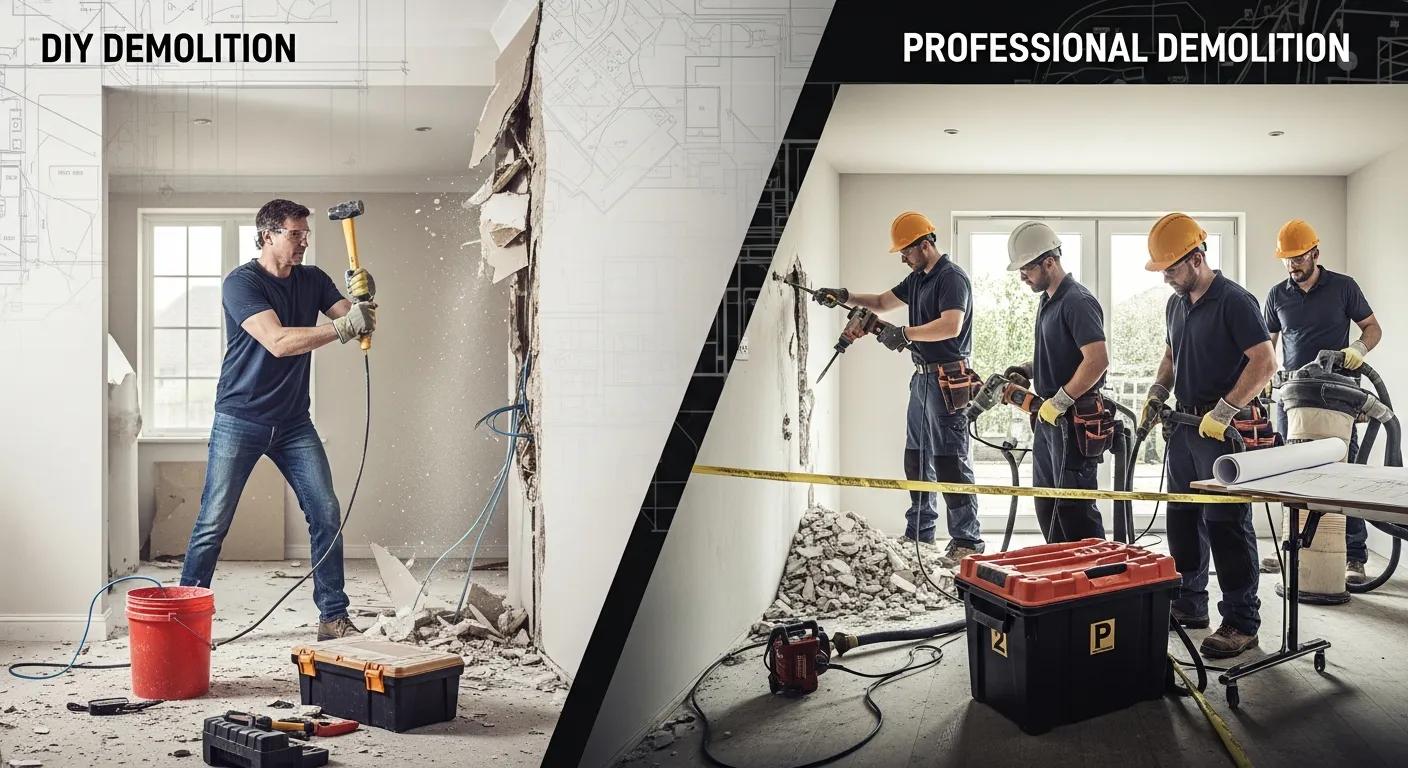
DIY vs Professional Demolition: Key Insights
Homeowners choosing between DIY demolition and hiring professionals must weigh cost, safety, and effectiveness. This guide compares both approaches so you can decide which aligns with your budget and project goals.
We’ll cover cost differences, how to estimate expenses, what drives contractor pricing, key safety issues, the equipment and techniques used, and the legal steps involved.
What are the cost differences between DIY and professional residential demolition?
Cost differences can be large. DIY may look cheaper up front, but rental fees, safety gear, and debris disposal add up. Professionals usually bundle labor, equipment, and waste removal, giving more predictable totals.
DIY projects can save on labor but often lack the speed and know‑how of pros, which can extend timelines and create extra costs if errors occur. Knowing the full cost picture helps you choose wisely.
How to estimate residential demolition costs accurately?
Accurate estimates start with project size and complexity: bigger or trickier jobs cost more. The materials you remove matter too, since some need special handling or disposal.
Common estimating errors include underestimating time and skipping permit costs. Use online calculators or consult professionals to get clearer figures and avoid surprises.
Research shows a systematic cost‑breakdown helps produce more reliable demolition estimates.
Residential Demolition Cost Estimation & Analysis
This research develops a quantitative method to estimate demolition project costs by breaking down cost components systematically. Because robust theoretical and practical summaries are limited, the study uses a case study and parameters drawn mainly from real‑world practice to examine economic performance.
Estimating demolition costs for single residential buildings, C Liu, 2003
What factors influence pricing for professional demolition contractors?
Several factors influence contractor pricing, including location, job complexity, and regulatory requirements.
| Factor | Description | Impact Level |
|---|---|---|
| Location | Accessibility and local regulations can affect costs. | High |
| Type of Demolition | The complexity of the demolition (e.g., residential vs. commercial) influences pricing. | High |
| Regulatory Compliance | Costs associated with obtaining necessary permits and adhering to safety standards. | Medium |
Knowing these drivers helps you compare bids and negotiate with contractors more effectively.
How do safety considerations differ between DIY and professional demolition?
Safety is critical. DIY work exposes you to risks like tool misuse, falling debris, and improper material handling. Lack of training and gear increases the chance of injury.
Professional crews follow strict safety rules, use proper equipment, and run protocols designed to reduce risk. That training and oversight make a major safety difference.
What are essential DIY demolition safety tips for homeowners?
If you choose DIY, follow clear safety rules. Use the right gear, plan tasks, and know how to handle materials safely.
- Wear Protective Gear : Always use safety goggles, gloves, and hard hats to protect against debris and injuries.
- Use Proper Tools : Ensure that you have the right tools for the job, and familiarize yourself with their operation.
- Plan for Waste Disposal : Have a clear plan for how you will dispose of debris, including renting a dumpster if necessary.
Following these precautions reduces accident risk and helps keep the worksite under control.
Which safety standards and regulations must professional contractors follow?
Professional contractors must follow multiple standards, such as OSHA rules, any state‑specific laws, and environmental disposal regulations.
- OSHA Regulations : The Occupational Safety and Health Administration sets forth guidelines to ensure worker safety on job sites.
- State-Specific Regulations : Different states may have additional regulations that contractors must adhere to, depending on local laws.
- Environmental Regulations : Contractors must also consider environmental impact and waste disposal regulations to minimize their ecological footprint.
Those regulations protect workers and the public and help ensure demolition work proceeds responsibly.
The high risks in demolition demand strict safety standards and tight controls to protect people and the environment.
Demolition Safety: Risks, Standards, and Protective Measures
Demolition and dismantling are highly dangerous to workers and nearby residents and may threaten the environment, property, and infrastructure. To ensure safety, standards must define organizational and technical documentation, outline procedures for demolition work, and enforce strict control over technology and safety practices.
Ensuring safety during the demolition and dismantling of buildings, 2023
What equipment and techniques are used in DIY versus professional demolition?
DIY jobs use basic hand and rental tools like sledgehammers, pry bars, and reciprocating saws; larger DIY jobs may require rented jackhammers or dumpsters.
Professional contractors use heavy and specialised machines—excavators, bulldozers, concrete crushers—and advanced safety gear to work faster and safer.
Which demolition equipment can homeowners rent for DIY projects?
Homeowners can rent common demolition gear such as jackhammers, dumpsters, and reciprocating saws for many DIY tasks.
- Jackhammers : Ideal for breaking up concrete and asphalt.
- Dumpsters : Essential for debris disposal, allowing for efficient cleanup.
- Reciprocating Saws : Useful for cutting through wood and metal structures.
Renting appropriate equipment makes the work safer and faster.
What specialized tools do professional demolition contractors use?
Contractors rely on heavy equipment for efficiency and control, including excavators for structure removal, bulldozers for clearing and grading, and concrete crushers for breaking down material.
- Excavators : For large-scale demolitions, excavators provide the power needed to take down structures quickly.
- Bulldozers : These are used for clearing debris and leveling the site after demolition.
- Concrete Crushers : These tools allow for the efficient breaking down of concrete structures, making debris easier to manage.
Specialised tools speed the job and improve accuracy while reducing onsite hazards.
What permits and legal requirements apply to residential demolition in Cooper City?
In Cooper City, homeowners usually must obtain a demolition permit from the local building authority to ensure compliance with zoning and safety rules.
Environmental rules also apply, especially when hazardous materials are involved. Skipping permits can cause fines and delays, so check requirements before you start.
How to obtain residential demolition permits in Cooper City and Plantation?
Permit steps typically include submitting an application to the building department, undergoing a review for compliance, and receiving the permit once approved.
- Application Submission : Homeowners must submit a permit application to the local building department, detailing the scope of the demolition.
- Review Process : The application will be reviewed for compliance with local regulations and safety standards.
- Permit Issuance : Once approved, the permit will be issued, allowing the homeowner to proceed with the demolition.
It’s wise to consult local officials to confirm requirements and avoid permit issues.
What are the consequences of non-compliance with demolition permits?
Ignoring permit rules can trigger fines, legal action, and added project costs.
- Legal Repercussions : Homeowners may face fines or legal action for unauthorized demolition activities.
- Financial Penalties : Non-compliance can result in significant financial penalties, which can add to the overall cost of the project.
- Impact on Future Projects : A history of non-compliance can hinder homeowners’ ability to obtain permits for future projects, affecting their long-term plans.
Staying compliant protects your budget and future project plans.
How does residential demolition connect to fence installation services in Port St Lucie?
Demolition and fence installation often follow each other in property projects: once a site is cleared, homeowners typically install fencing to secure boundaries.
Proper demolition readies the site for fence work, smoothing the transition between services. Hiring pros for both tasks can improve quality and timing.
Why is professional fence installation recommended after demolition?
Professional fence installation offers quality, speed, and safety—important after a demolition project.
- Quality Assurance : Professionals ensure that the fence is installed correctly, providing durability and stability.
- Time Efficiency : Hiring experts can save homeowners time, allowing them to focus on other aspects of their project.
- Safety Considerations : Professionals are trained to handle the installation safely, reducing the risk of accidents.
Choosing professional installation helps ensure the fence meets performance and safety expectations.
What is the typical timeline for fence installation post-demolition?
Timing depends on fence type, site preparation needs, and weather. Simple jobs start sooner; complex sites take longer.
- Type of Fence : Different materials and designs may require varying installation times.
- Site Preparation : If the demolition site requires significant cleanup, this can extend the timeline.
- Weather Conditions : Adverse weather can delay installation, particularly for outdoor projects.
Expect installation to take from a few days to a couple of weeks after demolition, depending on these factors.
How to manage environmental impact and waste disposal in residential demolition?
Managing environmental impact requires planning: recycle what you can, dispose of hazards correctly, and aim to minimise waste.
- Recycling Materials : Salvaging materials such as wood, metal, and concrete can significantly reduce waste.
- Proper Disposal : Ensuring that hazardous materials are disposed of according to local regulations is essential for environmental protection.
- Minimizing Waste : Planning the demolition process to minimize unnecessary waste can help reduce the overall environmental footprint.
Applying these steps makes demolition greener and can reduce disposal costs.
Older homes can pose lead dust hazards that require careful handling during demolition to protect public health.
Lead Dust Hazards in Residential Demolition
Demolishing older housing can remove lead paint and dust hazards and create space for lead‑safe redevelopment. This study measured changes in ambient dust lead levels after demolishing older lead‑containing row houses in Baltimore, Maryland.
A study of urban housing demolitions as sources of lead in ambient dust: demolition practices and exterior dust fall, AO Orlova, 2003
What are best practices for demolition debris recycling?
Best practices include sorting materials, using specialised recycling facilities, and training workers on recycling procedures.
- Sort Materials : Separate recyclable materials from non-recyclable waste to streamline the recycling process.
- Use Recycling Facilities : Partner with local recycling facilities that specialize in construction and demolition debris.
- Educate Workers : Ensure that all workers involved in the demolition are aware of recycling practices and the importance of minimizing waste.
These steps reduce landfill waste and can lower disposal costs for homeowners.
How do professionals ensure sustainable demolition processes?
Professionals use low‑emission equipment, detailed waste plans, and reuse strategies to cut environmental impact.
- Eco-Friendly Equipment : Utilizing machinery that minimizes emissions and noise pollution.
- Waste Management Plans : Developing comprehensive plans for waste disposal and recycling to reduce landfill contributions.
- Sustainable Practices : Adopting methods that prioritize the reuse of materials and minimize environmental impact.
Sustainable methods let homeowners meet project goals while limiting environmental harm.
Frequently Asked Questions
What should homeowners consider before deciding on DIY demolition?
Evaluate your skills, project complexity, and risks. Confirm you have the right tools, safety gear, and a waste plan. Check local rules and permits. For hazardous materials or structural issues, hire professionals.
How can homeowners ensure safety during DIY demolition?
Wear proper PPE, learn to use tools safely, keep the site tidy, and plan debris removal. These steps cut accident risk.
What are the environmental considerations in residential demolition?
Recycle usable materials, dispose of hazardous waste per regulations, and plan to reduce unnecessary waste to protect the environment.
What are the benefits of hiring professional demolition services?
Professionals offer expertise, speed, safety, and access to specialised equipment. They also handle permits and compliance, reducing legal and scheduling risks.
How can homeowners prepare for the cleanup process after demolition?
Make a debris removal plan, rent a dumpster or arrange a service, sort recyclables, secure the site, and organise help to speed cleanup.
What are common mistakes homeowners make during DIY demolition?
Common errors include underestimating time and effort, skipping permits, poor waste planning, not using proper gear, and ignoring structural risks.
What should homeowners do if they encounter hazardous materials during demolition?
Stop work, avoid disturbing the material, and contact certified hazardous‑material professionals. Notify local authorities if required.
Conclusion
The choice between DIY and professional demolition affects cost, safety, and results. Know the expenses, safety needs, and equipment involved, and consider consulting professionals to handle complex or risky work. Review resources to find qualified services that fit your project.