

Keeping Demolition Sites Safe: Practical Strategies

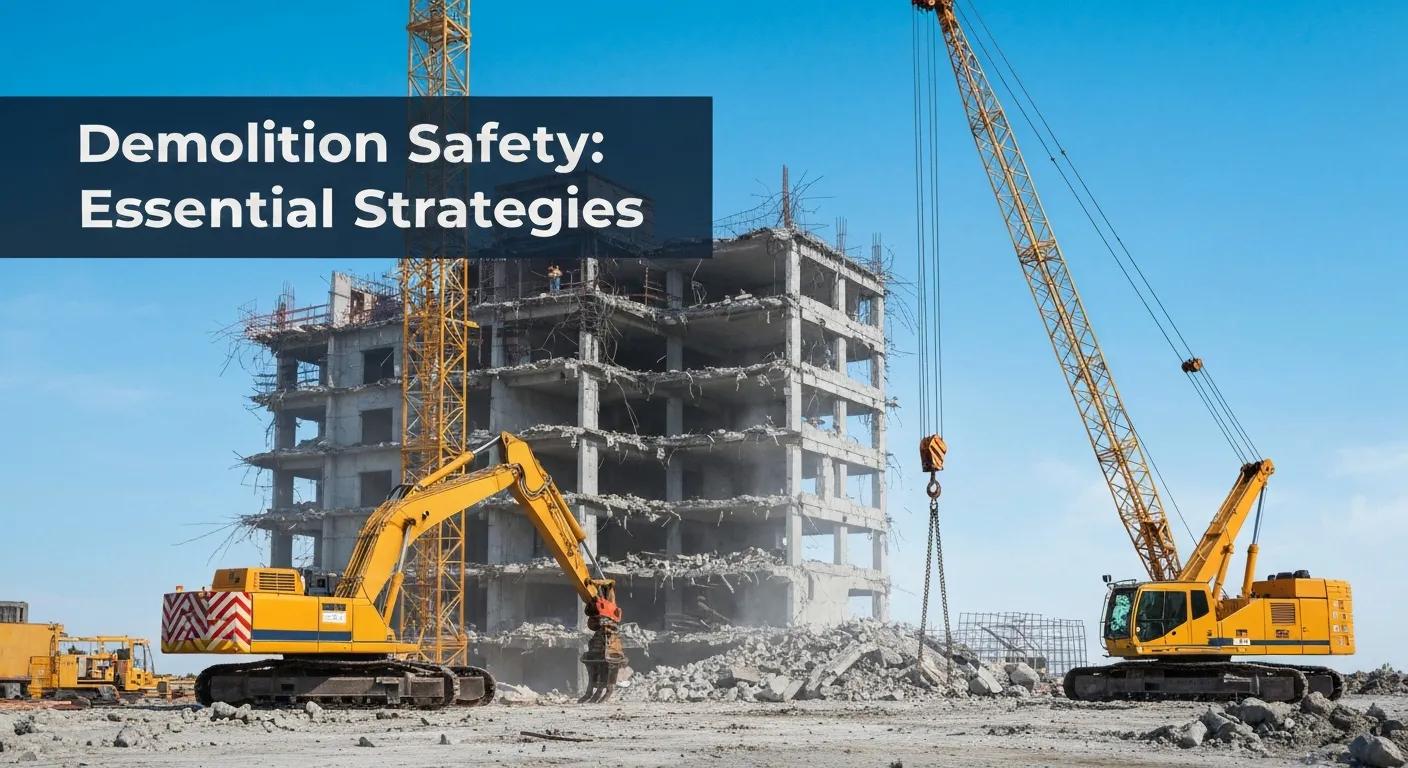
Demolition site safety is a planned combination of policies, engineering controls, and on-the-ground work practices designed to protect crews, the public, and nearby property — while keeping projects on schedule and meeting legal requirements. The most effective programs start with thoughtful pre-demolition planning, use the right personal protective equipment, control hazardous materials, and prepare for emergencies to prevent incidents and regulatory problems. This article translates OSHA demolition rules into practical site procedures, explains how to run a risk assessment that reduces collapse and hidden hazards, and shows which PPE and monitoring tools are needed for common demolition tasks. You’ll find clear checklists for assessments, concise tables linking OSHA rules to PPE, and step-by-step guidance for asbestos, lead, and silica work that follows current best practice. Each section moves from regulatory context to hands-on application so you can set measurable controls, document compliance, and cut downtime from safety incidents.
What Are the Key OSHA Demolition Regulations to Ensure Site Safety?
OSHA’s demolition rules set baseline performance expectations for worker protection, fall prevention, hazardous-material handling, and structural stability. In practice, that means contractors must identify hazards, provide appropriate controls and training, and keep records that show compliance. On the ground, these standards translate into routine actions like pre-shift inspections, assigning trained operators, and keeping inspection and training logs. The list below highlights the top OSHA areas demolition teams should prioritize for quick, actionable clarity.
- Fall protection and work at heights: install guardrails, harness systems, or monitored exclusion zones where exposure warrants.
- Hazardous-material controls: identify, sample, and abate asbestos, lead, and silica under applicable rules before disturbance.
- PPE and training: provide hazard-matched PPE and keep fit-test and inspection records current.
- Structural stability planning: secure engineered surveys and sequence work to avoid unintended collapse.
- Equipment safety and lockout/tagout: enforce equipment inspections, assign competent operators, and use energy-control procedures.
The next section explains how OSHA standards become everyday site governance and enforcement practices.
How Do OSHA Standards Govern Demolition Safety Practices?
OSHA governs demolition by setting enforceable performance goals that require employers to adopt controls, deliver training, and maintain records to protect workers and bystanders. Think of the standards as both the rulebook and a practical roadmap: perform a hazard assessment, install controls like shoring or water suppression, and document training and inspections to demonstrate due diligence. OSHA’s focus on employer-provided training leads to routine competency checks for operators and refresher sessions after incidents, creating a continuous safety loop. A strong program pairs written policies with daily toolbox talks and measurable inspections so compliance is part of how crews work, not just something on paper. That governance model leads directly into the specific PPE obligations demolition sites must follow.
Which OSHA Requirements Apply to Personal Protective Equipment in Demolition?
OSHA requires employers to assess hazards and provide PPE that matches those hazards — head, eye, respiratory, hearing, and foot protection when needed. Respirators must be fit-tested and maintained to the applicable standards when airborne particulates, asbestos, or silica are likely; hearing protection is required where noise limits are exceeded; and hard hats and protective footwear are mandatory where falling objects or crush risks exist. Documentation — training records, fit-test logs, and inspection checklists — is the evidence auditors will expect. In short: choose PPE for the hazard, train crews in its use, and keep inspection schedules so PPE performance is verifiable every shift.
The table below distills key OSHA areas into practical compliance takeaways for site managers.
Different OSHA standards apply directly to demolition activities and drive practical site-level requirements.
| OSHA Standard Area | Applies To | Key Compliance Requirement |
|---|---|---|
| Fall protection | Work at height, unstable structures | Install guardrails, harnesses, or controlled exclusion zones and keep inspection records |
| Hazardous materials | Asbestos, lead, silica disturbances | Conduct pre-demolition testing and abatement planning; document monitoring and waste manifests |
| PPE & respiratory protection | Airborne particulates and physical hazards | Provide employer-issued PPE, perform fit testing, and retain maintenance records |
| Equipment safety | Mobile machinery and demolition equipment | Verify operator certification, complete pre-start checks, and follow lockout/tagout procedures |
| Structural stability | Sequential demolition and partial removals | Complete pre-demolition engineering surveys and design temporary supports as required |
This summary clarifies regulatory focus areas and points to practical next steps before demolition work begins.
How Can a Comprehensive Demolition Risk Assessment Improve Safety?
A thorough demolition risk assessment identifies hazards, defines mitigation tactics, and delivers an actionable plan that lowers incidents, protects the schedule, and documents due diligence for regulators and stakeholders. Combining a site survey, utility verification, hazardous-material sampling, and structural analysis turns unknowns into controlled risks and contingencies. Typical deliverables include a risk register, a sequence-of-work plan, required permits and notifications, and a mitigation schedule with assigned owners. Prioritizing high-risk items for engineering controls and specialist abatement reduces exposure, lowers incident rates, and helps avoid costly stoppages.
Framework for Risk Assessment in Building Demolition
Many demolition projects still rely on contractor experience rather than a structured risk-assessment process. This paper proposes a practical three‑phase framework — identify, assess, control — to manage demolition hazards from major to minor.
Development of a framework for risk assessment in building demolition works, DJ Patel, 2023
The next section presents a concise checklist to conduct a demolition site risk assessment efficiently.
- Review existing documentation and drawings to understand building systems and previous uses.
- Perform a walkdown to spot visible structural concerns, hazardous-material indicators, and access constraints.
- Verify utilities through documented disconnects and locate underground services with electronic locators.
- Order environmental sampling for asbestos, lead, and silica when building age, construction type, or visible materials indicate risk.
- Create a written risk register and mitigation plan that assigns responsibilities and timelines.
These steps show how a site survey uncovers structural and hazardous-material risks and how those findings shape the demolition plan.
What Are the Steps for Conducting a Demolition Site Risk Assessment?
A procedural risk assessment starts with document review, moves to a focused on-site survey and testing, and ends with a prioritized mitigation plan with assigned owners. Begin by collecting building plans, prior inspection reports, and permits to form the baseline. Then walk the site with structural and environmental specialists to flag red flags such as concealed voids, corroded supports, or suspect insulation. Use tools — air monitors, moisture meters, and structural sensors — to quantify hazards and guide controls. Finish with a clear risk register that ranks hazards, details mitigation steps (shoring, abatement, water suppression), and sets monitoring and acceptance criteria. A documented assessment becomes the backbone of daily briefings and proof of a systematic safety approach.
How Does Site Survey Identify Structural and Hazardous Material Risks?
Site surveys combine visual inspection, targeted sampling, and professional evaluation to find structural weaknesses and locate hidden hazardous materials. Signs like cracking, sagging floors, loose connections, or bulging walls require immediate engineering review. Building age and materials guide decisions to sample for asbestos, lead paint, and silica-bearing materials. Laboratory analysis confirms hazards and informs containment, abatement scope, and air-monitoring plans. Survey results change work sequencing — isolating unstable elements, scheduling abatement before mechanical demolition, and setting monitoring frequency to protect crews and the public.
What Personal Protective Equipment Is Required for Demolition Workers?
PPE for demolition workers includes the wearable controls chosen to address identified hazards — falling objects, airborne contaminants, noise, and chemical risks — and is effective only when used within the broader hierarchy of controls. Selection should follow the risk assessment: respirators for silica and asbestos, eye and face protection for cutting or breaking, hearing protection near heavy equipment, and impact-resistant footwear where crush hazards exist. Employers must run inspection schedules, maintain respirator fit-testing programs, and replace gear on a defined schedule so PPE performs reliably under harsh conditions.
Note: selecting the correct PPE is the employer’s responsibility and should be driven by a documented hazard assessment and formal training.
The table below maps common PPE items to the hazards they protect against and notes typical use-cases and standards.
| PPE Item | Protects Against | Typical Use-Case / Standard |
|---|---|---|
| Hard hat | Head injury from falling debris | Use Type I for vertical impact; Type II for lateral impact; inspect daily |
| Respirator (NIOSH-rated) | Inhalation of asbestos, silica, dust | Fit-tested respirators for airborne hazards; follow assigned protection factors |
| Eye protection | Flying particles and dust | Safety glasses or face shields during cutting, grinding, and crushing |
| Hearing protection | High-decibel equipment exposure | Earplugs or earmuffs where monitoring shows exposures above limits |
| Protective gloves & boots | Cuts, abrasions, crush injuries | Cut-resistant gloves and steel- or composite-toe boots with puncture resistance |
This comparison helps managers pick the right PPE and fold those choices into training and inspection routines; next, we cover correct use and maintenance so PPE does its job on-site.
Which Types of PPE Protect Against Common Demolition Hazards?
Different hazards require specific PPE combinations: head and foot protection reduce impact risk, respirators guard against airborne contaminants, and eye and hearing protection prevent sensory injuries from dust and noise. For dust-generating tasks — concrete breaking or sanding old finishes — use NIOSH-rated respirators with proper cartridges or filters. When asbestos or lead is present, add disposable coveralls and decontamination procedures. Impact- and puncture-resistant footwear protects from heavy fragments and rebar, and gloves chosen for cut or chemical resistance prevent lacerations and skin exposure. Always select PPE based on a written hazard assessment and applicable certification and fit standards.
Managing Health and Safety in Demolition Projects
Demolition is inherently hazardous and requires knowledge of construction methods and appropriate demolition techniques. This study reviews dangers and problems observed on demolition sites and highlights that, in some cases, operators are not provided with adequate safety clothing or PPE.
Managing health & safety in refurbishment projects involving demolition and structural instability, CO Egbu, 2002
How Should PPE Be Properly Used and Maintained on Demolition Sites?
Proper PPE use depends on training, daily inspections, and consistent maintenance: crews must know how to don and doff gear, supervisors must enforce pre-use checks, and employers must follow replacement schedules tied to wear and certification dates. Respirator programs call for medical clearance, fit testing, cartridge-change schedules, and clear procedures for laundering or disposing of reusable versus disposable items. Store PPE away from contaminants, clean reusable items regularly, and keep records of inspections and training to create an auditable trail that ensures PPE provides expected protection. These practices are especially important when handling hazardous materials, where contamination control and decontamination are critical.
How Should Hazardous Materials Be Managed Safely During Demolition?
Safe hazardous-material management begins with early detection through testing, then staged abatement, engineering controls, and regulated disposal to prevent worker exposure and environmental release. Start with presumptive identification based on building age and materials, then perform targeted sampling for asbestos, lead, and respirable crystalline silica. Engineering controls — negative-pressure enclosures, HEPA-filter vacuums, and water suppression — limit airborne migration while licensed abatement contractors work under containment. Keep thorough documentation — air-monitoring logs, waste manifests, and disposal receipts — to demonstrate compliance and protect public health. The table below guides handling and disposal decisions for common hazardous demolition materials.
| Hazardous Material | Handling/Containment Step | Regulatory / Operational Note |
|---|---|---|
| Asbestos | Pre-demolition testing; negative-pressure containment and licensed abatement | Requires specialist abatement and proper waste manifesting |
| Lead paint/dust | Wet methods, HEPA vacuuming, and encapsulation or removal | Follow lead-safe practices and disposal rules for contaminated debris |
| Silica (respirable crystalline) | Water suppression, local exhaust ventilation, and respiratory protection | Use engineering controls to lower airborne silica and monitor exposures |
This table provides a practical reference; next we outline best practices for asbestos, lead, and silica to minimize exposure.
What Are the Best Practices for Handling Asbestos, Lead, and Silica?
Asbestos work begins with certified testing and licensed abatement carried out under negative-pressure containment before mechanical disturbance. Workers use appropriate respirators and decontamination units to prevent fiber migration. Lead-safe methods emphasize wet work, HEPA vacuuming, waste segregation, and careful cleaning to avoid secondary contamination. Silica control relies on water suppression, local exhaust ventilation, and task modification to reduce dust generation, backed by air-monitoring to ensure exposures stay below OSHA PELs. Each material requires written procedures, trained personnel, and disposal at permitted facilities to stay compliant and protect worker health.
Hazard Identification and Risk Mitigation in Demolition
This paper examines hazard identification and mitigation strategies used in demolition and recommends specialized training in risk assessment and mitigation planning for all personnel involved in demolition activities.
Assessment of Hazard Identification and Risk Mitigation Strategies during Building Demolition in South West Bangladesh, R Hamilton, 2025
How Do Specialized Procedures Minimize Exposure and Environmental Risks?
Special procedures — negative-pressure enclosures, staged decontamination, and continuous air monitoring — reduce airborne contamination and prevent off-site migration of hazardous materials. Calibrated air monitoring verifies controls are working and provides triggers for corrective action. Decontamination zones and staged cleaning prevent cross-contamination of clean areas. Waste handling protocols — segregation, labeled containment, and disposal through authorized channels — stop unregulated release and create the manifests regulators require. Combined with PPE and administrative controls, these measures add redundant layers that protect workers, the public, and the environment.
What On-Site Safety Protocols Prevent Structural Collapse and Accidents?
Preventing collapse and accidents requires engineered planning, temporary works (shoring and bracing), a controlled removal sequence, and vigilant inspection routines that align with the demolition risk register. A structural stability program includes a pre-demolition survey by a qualified engineer, clear definition of load paths, staged removal of supports, and installation of temporary supports when needed. Daily checklists and structural sensors can detect unexpected movement and trigger immediate work stoppage and corrective action. Trained spotters, clear communications, and firm procedures keep teams aware and reduce the risk to workers and adjacent properties.
- Follow engineered demolition sequences and temporary-work designs prepared by a qualified professional.
- Use daily structural inspection checklists and assign monitoring responsibilities.
- Install temporary shoring, bracing, and controlled removal methods to preserve load paths.
- Employ instrumented monitoring for sensitive structures or tight urban sites.
- Maintain reliable two-way communications and standardized visual signals between operators and ground crews.
These steps emphasize prevention and continuous monitoring; the next subsections explain how to assess stability and run equipment safely to support those controls.
How Is Structural Stability Assessed and Maintained During Demolition?
Assessing structural stability pairs a pre-demolition engineered survey with ongoing visual and instrumented monitoring to spot any progressive deterioration or unexpected movement. Surveys record material conditions, load-bearing elements, and likely failure modes; that information informs temporary works like shores and braces and a removal sequence that preserves integrity until supports are intentionally removed. During operations, inspectors carry out scheduled checks and review readings from crack gauges or tilt sensors. Any deviation from acceptable thresholds requires immediate corrective action and possibly a revised sequence. Continuous assessment turns a static plan into a dynamic safety process that adapts to real conditions and minimizes collapse risk.
What Equipment Operation Safety Measures Are Essential?
Safe equipment use depends on competent operators, pre-operation checks, clearly defined exclusion zones, and standard signaling to prevent machine-related incidents. Operators should be certified for the machines they run, and equipment must pass daily pre-start inspections for hydraulics, electrical systems, and controls. Exclusion zones with signage and physical barriers protect the public and ground teams; spotters and radio communications coordinate machine movements in tight sites. Lockout/tagout procedures for energy isolation and routine maintenance schedules further reduce the chance that mechanical failure will create hazardous events.
How Can Demolition Site Management and Emergency Preparedness Enhance Safety?
Good site management and emergency preparedness combine exclusion zones, public-protection measures, fire prevention, and clear emergency-response plans to reduce harm and ensure fast, effective action when incidents occur. Strong site governance assigns responsibilities for security, public interface, permits, and incident reporting. Exclusion zones and signage control access and reduce bystander risk. Fire prevention focuses on hot-work permits, proper fuel storage, and accessible extinguishers. Emergency plans define alarm steps, evacuation routes, muster points, incident-command roles, and contact procedures for emergency services. Regular drills, updated contact lists, and first-aid capability ensure teams can respond immediately to injuries or structural events.
Exclusion zones are layered controls that protect workers and the public while allowing machines to operate without unintended interactions.
The next subsections cover practical exclusion-zone design and emergency-response implementation.
What Are Exclusion Zones and How Do They Protect Workers and the Public?
Exclusion zones are physical, visual, and administrative barriers that separate hazardous work areas from safe spaces. They’re typically arranged as a work area, a buffer zone, and a public cordon to manage risk. The work area contains active demolition and requires full PPE and controlled access; the buffer keeps support personnel and vehicles at a safe distance; the public cordon keeps pedestrians and traffic well clear using signage and barriers. Zone size depends on potential debris patterns, machine swing radii, and site constraints — urban sites need tighter coordination with traffic control while suburban sites can often provide larger buffers. Enforce zones through access control, signage, and trained gate staff to prevent unauthorized entry and reduce incidents from falling debris or machine operations.
Common components of an effective exclusion-zone strategy include:
- Clearly marked and physically bounded work areas with controlled access points.
- Buffer zones sized to account for debris scatter and equipment reach.
- Public cordons and signage that communicate risk to passersby and local stakeholders.
A strong exclusion-zone framework naturally leads into fire prevention and emergency-response planning, which complete site preparedness.
How Should Fire Prevention and Emergency Response Plans Be Implemented?
Fire prevention starts by identifying fuel sources, hot-work activities, and ignition risks, then using controls such as permit systems, portable extinguishers, and safe storage for flammables. Emergency-response plans should spell out alarm activation, evacuation routes, primary and secondary muster points, roles for on-site incident commanders, and contact protocols for emergency services. Regular drills validate the plan, expose gaps, and build muscle memory so crews respond efficiently when real incidents occur. On-site equipment — first-aid kits, AEDs, and trained responders — complements planning by enabling immediate lifesaving measures while external services arrive.
For contractors and property owners who want local, safety-focused demolition services, Miller & Myers Group Demolition (M & M Demolition Contractors) operates licensed, insured teams that follow OSHA-aligned practices to protect workers and the public across Broward and Miami-Dade counties. Their service pages cover commercial, residential, concrete, pool, interior, selective demolition, and land clearing — with safety as the top priority on every job.
- Keep an up-to-date emergency contact list and clear on-site incident roles.
- Run quarterly drills and hold immediate post-incident debriefs to update procedures.
- Ensure firefighting equipment and trained personnel are available during high-risk tasks.
These steps complete the preparedness loop: planning, practice, and capable contractors reduce both the likelihood and severity of incidents.
For teams that need demolition expertise that documents compliance and delivers controlled, safe outcomes, Miller & Myers Group Demolition and our Cooper City demolition team provide licensed, insured services in Broward and Miami-Dade counties with a clear emphasis on OSHA standards and worker safety.
Frequently Asked Questions
What training is required for demolition workers to ensure safety?
Workers need thorough training that covers site safety, hazard recognition, proper PPE use, machinery operation, and emergency response. Training should include hazardous-material handling and procedures for tasks specific to the job. Regular refresher courses keep skills current, and employers must keep training records for compliance and audits.
How can technology enhance safety on demolition sites?
Technology strengthens safety through tools like drones for aerial surveys, advanced monitoring systems, and virtual-reality training. Drones let teams inspect structures and spot hazards without putting people at risk. Wearables and smart helmets can monitor conditions and alert crews to danger. These technologies make risk assessments faster and more accurate while improving onsite decision-making.
What role do site supervisors play in maintaining safety during demolition?
Site supervisors enforce safety rules, run daily inspections, manage exclusion zones, and keep communication lines open. They lead safety briefings, address hazards, and confirm that workers have the right PPE and training. Their day-to-day leadership sets the tone for accountability and safe behavior on site.
What are the common causes of accidents in demolition work?
Typical causes include falls from heights, equipment failures, exposure to hazardous materials, and structural collapse. Lack of training, poor communication, and failure to follow procedures increase risk. Unexpected conditions — hidden weaknesses or unmarked utilities — also create danger. Thorough planning and strict adherence to safety protocols help prevent these incidents.
How often should safety inspections be conducted on demolition sites?
Conduct inspections daily before work starts and at intervals through the day. These checks identify hazards, confirm equipment function, and verify PPE use. Perform more comprehensive inspections at major project milestones or after significant changes to the site. Keep inspection records for compliance and continuous improvement.
What should be included in an emergency response plan for demolition sites?
An emergency plan should cover likely scenarios — collapses, fires, hazardous spills — and include evacuation routes, muster points, roles and responsibilities, and communication with emergency services. Regular drills ensure crews know the plan and can act quickly. Document the plan and drill results to support compliance and learning.
How can contractors ensure compliance with OSHA regulations during demolition?
Contractors meet OSHA requirements by running a comprehensive safety-management system: regular training, thorough risk assessments, routine inspections, and complete documentation. Stay current on relevant standards and integrate them into daily operations. Routine audits and a culture that encourages safety help teams follow regulations consistently.
Conclusion
Strong demolition safety practices protect workers and the public while keeping projects on track and compliant with OSHA. By prioritizing thorough risk assessments, correct PPE selection and maintenance, and practiced emergency plans, teams reduce incidents and improve efficiency. If you need demolition expertise that documents compliance and delivers controlled, safe results, partner with licensed professionals who make safety a priority. Contact Miller & Myers Group Demolition to discuss your next project and ensure it’s handled to the highest safety standards.