

How to Ensure Safe Demolition Practices with Licensed Contractors in Davie, FL
Demolition requires careful planning, licensed professionals, and proper permits to ensure not only the structural integrity of the site but the safety of workers, residents, and the environment. This comprehensive guide outlines the critical steps for hiring qualified contractors, managing hazardous materials, obtaining permits, and responsibly handling debris specifically for projects in Davie, FL. Following these guidelines will help keep your demolition projects safe, efficient, and compliant with all applicable regulations and regional nuances.
Regulatory Requirements
Compliance with local, state, and federal regulations is fundamental to protecting workers, neighbours, and the surrounding environment during demolition. In Davie, FL, it is mandatory to obtain the correct permits and strictly follow local building codes and environmental laws before commencing any work.
Common permits essential for lawful demolition include:
- Building Permits: Required for any structural demolition activities to ensure adherence to building codes and safety standards.
- Environmental Permits: Necessary when asbestos, lead-based paint, or other hazardous substances are present on-site.
- Site Development Permits: Applicable when zoning or land-use regulations impact the demolition project.
Engage with local permitting authorities early in the planning process to confirm the exact permit requirements and avoid costly fines, project delays, or stop-work orders. This is particularly important in Davie, FL, where specific municipal codes may add unique considerations such as noise ordinances and neighborhood preservation rules.
Essential Safety Guidelines
Enforcing rigorous safety protocols and equipping crews with appropriate personal protective equipment (PPE) are critical to mitigating risks during demolition. Licensed contractors are required to document adherence to these practices, enhancing accountability and reducing liability.
- OSHA Compliance: Fully comply with Occupational Safety and Health Administration (OSHA) standards applicable to demolition operations, including fall protection and hazard communication.
- Use of Personal Protective Equipment (PPE): Provide comprehensive protection with helmets, gloves, respirators, eye protection, and specialized gear tailored to site hazards.
- Site Safety Protocols: Implement secure perimeters with adequate fencing, clear signage, and conduct regular safety inspections to identify and correct potential hazards promptly.
Hiring licensed demolition contractors who systematically follow these safety standards significantly reduces the likelihood of accidents and improves project outcomes. Furthermore, experienced contractors in Davie offer an added advantage with their familiarity in local emergency response protocols and community safety expectations.
Licensed Demolition Contractors’ Methods to Ensure Site Safety
Professional demolition contractors employ extensive risk assessment methods, regulatory compliance measures, and advanced safety systems to manage hazards efficiently throughout the project lifecycle.
- Regular Site Assessments: Conduct initial and ongoing hazard evaluations to adapt safety controls as conditions evolve during demolition.
- Regulatory Compliance: Apply all relevant federal, state, and municipal regulations to maintain a safe workplace.
- Advanced Safety Equipment: Utilize barriers, scaffolding, hoarding, dust-control systems, and air monitoring technology to safeguard workers and the public.
These comprehensive safety approaches facilitate smooth, incident-free project execution and align with the stringent standards upheld in Davie, FL.
Protocols for Hazardous Material Handling
Proper identification, abatement, and thorough documentation of hazardous materials are vital to preventing harmful exposures and environmental contamination. Many older buildings contain dangerous substances such as asbestos, lead, and polychlorinated biphenyls (PCBs), which require specialized management.
Key actions include:
- Identification: Conduct detailed pre-demolition environmental surveys using certified inspectors to detect asbestos, lead, PCBs, and other regulated hazards.
- Abatement: Engage licensed abatement contractors trained in containment, removal, and disposal techniques compliant with federal and state regulations.
- Documentation: Maintain meticulous records of hazard surveys, permit approvals, notifications to regulatory agencies, and waste disposal receipts.
Adhering to these protocols safeguards workers, nearby residents, and ensures compliance with legal standards in Davie, FL.
For an extensive review of hazardous building materials management, consider consulting this authoritative resource.
Hazardous Material Handling in Demolition: Identification and Removal
This chapter provides an in-depth overview of the history, properties, hazards, and regulatory mandates associated with common demolition-related materials. It explains the criteria under which certain substances are classified as hazardous waste, including detailed descriptions of asbestos- and PCB-containing materials and their respective regulatory frameworks. Additionally, it outlines practical steps for the identification and removal of concerning construction materials during demolition and renovation projects.
Hazardous and dangerous materials in CDD, TG Townsend, 2023
Obtaining Necessary Demolition Permits
Effective permit acquisition in Davie requires careful preparation and adherence to local procedures. Submit complete and accurate applications, factor in adequate processing time, and maintain open communication with permitting officials throughout.
Typical procedural steps include:
- Application Process: Compile comprehensive site plans, contractor licenses, environmental surveys, and completed permit forms for submission.
- Timelines: Anticipate variable permit processing durations based on project scope and regulatory workload; plan accordingly to avoid delays.
- Regulatory Contact: Establish early and ongoing dialogue with permitting agencies to clarify requirements and resolve any emerging issues.
Systematically track submission statuses, respond promptly to information requests, and retain all documentation including approvals and correspondence for accountability. Contractors working in Davie often emphasize collaborative communication with municipal departments to navigate local nuances effectively.
Best Practices for Demolition Debris Removal and Environmental Waste Management
Proactive planning for debris disposal is essential. Prioritize waste reduction strategies such as sorting and recycling to comply with environmental regulations and minimize landfill impact.
Recommended steps include:
- Waste Disposal Compliance: Strictly follow local and state regulations governing hazardous and non-hazardous waste disposal, including manifests and transport documentation.
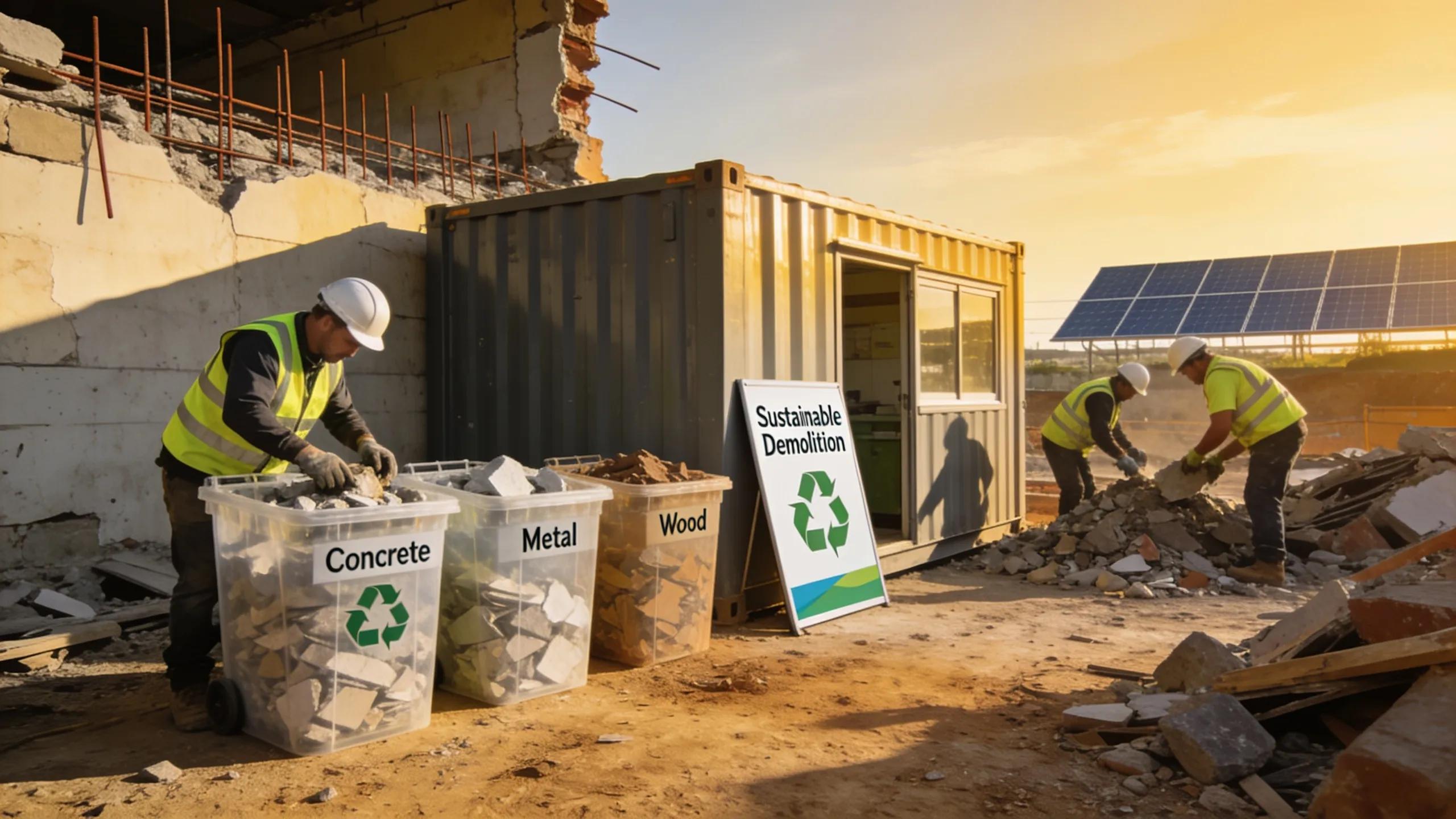
- Recycling: Separate recyclable materials such as metals, concrete, and untreated wood for diversion from landfills, supporting sustainability goals.
- On-Site Sorting: Establish clearly labelled segregation stations with trained personnel to improve sorting accuracy and efficiency.
Documenting all disposal and recycling activities supports regulatory compliance and can reduce project costs. Many contractors in Davie prioritize partnerships with certified recycling facilities to enhance sustainable demolition practices.
Key Safety Protocols for Hazardous Material Handling
When hazardous materials are present, enforcing strict safety measures is critical to protecting workers and the public throughout the demolition process.
- PPE: Mandate use of chemical-resistant suits, respirators certified to filter particulates and fibers, protective gloves, and eye protection as stipulated by hazard assessments.
- Site Safety Assessment: Perform frequent safety audits, continuous air quality monitoring, and detailed hazard communication briefings.
- Emergency Procedures: Develop and maintain comprehensive spill-response plans, including worker training in emergency protocols and availability of decontamination stations.
Consistent enforcement of these safety standards reduces the chance of incident and associated liabilities in all operational locations in Davie, FL.
Demolition Permits and Licensing in Davie, FL
Acquiring demolition permits involves complete preparation of documentation, verification of contractor credentials, and coordination with utility providers to ensure safe project initiation.
- Required Documentation: Include detailed site plans, valid contractor licenses, proof of insurance, environmental hazard surveys, and safety plans.
- Application Procedures: Submit applications via official permitting portals or offices with all required attachments and correct fees.
- Utility Coordination: Schedule timely disconnection or capping of power, gas, water, sewer, and telecommunications services to prevent accidents.
These steps streamline permitting, prevent hold-ups, and support adherence to legal standards in Davie, FL.
Permit Requirements for Demolition in Davie and Surrounding Areas
Local regulations in Davie and neighbouring communities can impose specific permit types and conditions. Early consultation with municipal code enforcement and planning departments is essential.
- Permit Types: Determine all necessary demolition and environmental permits tailored to the project scope and location.
- Local Regulations: Comply with municipal safety, noise, dust control, and zoning laws.
- Submission Documents: Provide accurate, detailed site plans and support documentation to facilitate permit approval.
Thorough pre-application review helps prevent scheduling conflicts and ensures compliance throughout demolition projects in Davie and surrounding municipalities.
Impact of Safety and Environmental Regulations on Demolition Permitting
Enhanced safety and environmental regulations may increase application complexity by necessitating supplementary documentation, inspections, and environmental impact studies, particularly for larger or sensitive projects.
- Permit Impacts: Stricter standards may expand permit scope, add conditions, or require mitigation measures.
- Environmental Reviews: Large-scale demolitions may trigger mandatory environmental impact assessments to evaluate potential effects on air quality, water resources, and wildlife.
- Code Compliance: Aligning demolition activities with current state and local codes advances smoother permit approval and site safety.
Understanding and integrating these requirements from the outset expedites the permitting process and limits unforeseen complications in Davie.
Safe Management of Asbestos and Hazardous Material During Demolition in Davie, FL
Effective management of asbestos and other hazardous materials entails stringent procedures including qualified abatement, comprehensive permitting, proper containment, decontamination, and verified disposal, protecting public health and fulfilling legal mandates.
- Permits for Hazardous Waste: Obtain specific permits required for handling, transport, and disposal of asbestos-containing materials and other hazardous waste.
- Asbestos Removal: Utilize licensed abatement contractors following rigorous containment protocols and industry best practices.
- On-Site Safety: Employ dust suppression, air monitoring, and comprehensive clearance testing before site reoccupation.
These protocols minimize exposure risks and maintain compliance with EPA and state regulations in Davie and nearby regions.
Proper Disposal and Recycling of Demolition Debris in Davie, FL
Successful demolition projects in Davie integrate efficient material recovery through on-site sorting and maximize diversion of recyclable materials, while residual waste is transported to authorized facilities ensuring environmental compliance.
- Sorting Procedures: Separate metals, concrete, wood, cardboard, gypsum, and mixed demolition debris into dedicated recycling streams.
- Recycling Potential: Enhance resource recovery rates to lower disposal costs and reduce landfill use, effectively supporting sustainable construction goals.
- Waste Regulations: Abide by local and state environmental laws regarding waste manifests, transport, and landfill acceptance criteria.
Comprehensive waste management plans contribute to environmental stewardship and project efficiency throughout Davie.
Frequently Asked Questions
What Should You Look for When Hiring a Demolition Contractor in Davie?
Verify contractor licensing, insurance coverage, and experience specifically in demolition projects within Davie, FL. Evaluate references, safety records, and plans for hazardous-material management. Always request a detailed written estimate and realistic project timeline before hiring.
How Do Environmental Regulations Impact Demolition Projects in Davie?
Environmental regulations dictate procedures for waste handling, dust control, noise mitigation, and hazardous material abatement. Failure to comply can lead to substantial fines, project delays, and legal challenges. Select contractors well-versed in these regulations to safeguard your project.
What Are the Phases of a Demolition Project in Davie?
Demolition typically involves the following phases: detailed planning and risk assessment, permit acquisition, site preparation including utility disconnection, execution of demolition work with active safety and environmental controls, and final cleanup incorporating lawful disposal or recycling of debris.
What Are the Risks of DIY Demolition in Davie?
Unlicensed DIY demolition poses significant risks including physical injury, unintended structural damage, hazardous material exposure, and violations of regulatory requirements. Hiring licensed professionals reduces these risks by ensuring expertise, compliance, and safety standards are met.
How Can Recycling Benefit Demolition Projects in Davie?
Recycling diverts materials like metal, concrete, and wood from landfills, thereby reducing environmental footprint and disposal costs. It also can improve public perception by demonstrating commitment to sustainability and resource conservation.
What Are the Best Ways to Ensure Compliance During Demolition in Davie?
Secure all required permits, maintain consistent communication with permitting agencies, provide comprehensive safety training for workers, and thoroughly document every phase from permit acquisition through debris disposal.
Conclusion
Executing safe demolition projects with licensed contractors protects workers, the community, and your investment while ensuring adherence to all legal requirements. Professional expertise is indispensable for managing hazardous materials, enforcing comprehensive safety protocols, and navigating complex permitting processes. Begin every project by contacting a qualified demolition contractor and confirming permit acquisition and robust safety plans before breaking ground in Davie, FL.