

Take Control of Miami’s Residential Demolition

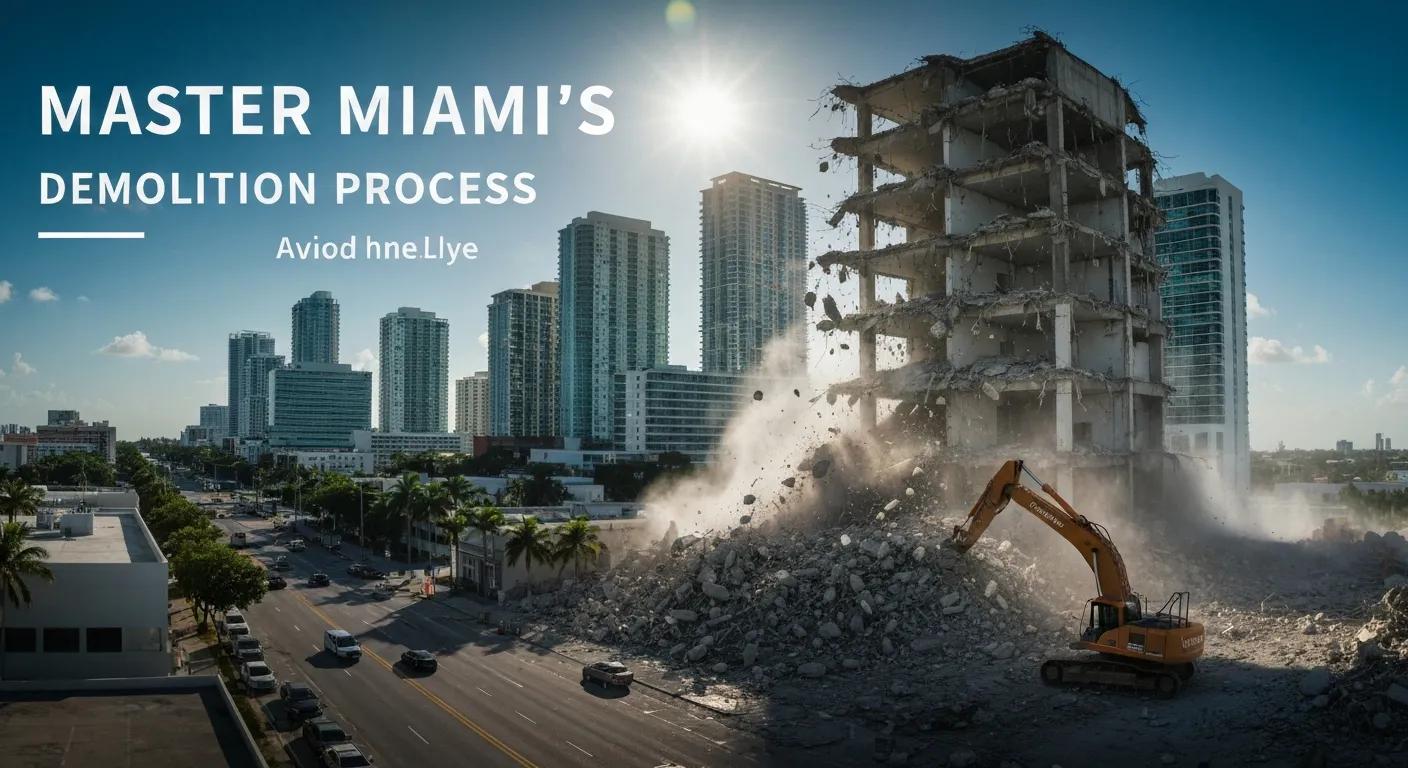
Residential demolition in Miami covers the controlled removal of a house, pool, interior build-out, or structural components to clear a site for redevelopment, safe disposal, or reuse. This guide explains why local permits, hazardous-material controls, and the right contractor matter in Miami-Dade County. You’ll find a step-by-step workflow, the permits and documents typically required, the cost drivers to expect, safety and hazardous-material procedures, and practical criteria for choosing a licensed contractor. The article traces the process from site assessment through final inspection, explains local debris handling and recycling, and includes checklists and tables to help you plan. By the end, you’ll be prepared to request accurate estimates, understand permit timelines, and compare contractor qualifications for a safe, compliant demolition project.
What Are the Key Steps in Miami’s Residential Demolition Process?
A typical Miami demolition starts with a site assessment to note structure type, hazardous materials, access limits, and permit needs. From there it moves through permitting, utility disconnects, execution, debris removal, and final inspection. Staging the work this way reduces risk and clarifies responsibilities for homeowners, contractors, and regulators. The sequence also helps you estimate timelines and costs and decide whether selective interior demo or full structural removal fits your reuse or redevelopment plans. Knowing each step lets you prepare paperwork, schedule utilities, and choose disposal strategies that meet Miami-Dade and state rules.
The practical steps below summarize the usual workflow for a residential property in Miami-Dade County:
- Perform an initial site assessment and hazardous-material survey to find asbestos, lead, or other regulated materials.
- Prepare and submit demolition permit applications and required documentation to the building department.
- Coordinate utility disconnections and secure confirmation from electric, gas, and water providers.
- Install pre-demolition protections such as erosion control, perimeter fencing, and shoring for nearby structures.
- Carry out demolition—selective or full—while separating recyclable materials on-site.
- Haul debris to permitted C&D facilities, manage manifests for regulated waste, and restore/grade the site.
- Complete final inspections and obtain sign-off from local authorities to close permit files.
These steps form the backbone of a compliant Miami demolition project and set clear expectations for schedule and cost. Sequencing permits, utility notices, and hazardous-material abatement correctly reduces delays and protects neighbors and the environment.
A basic timeline mapping of step durations and homeowner responsibilities clarifies what to expect and what documents are typically required at each stage.
| Phase | Typical Duration | Homeowner Responsibility / Outcome |
|---|---|---|
| Initial assessment & survey | 3–7 days | Provide property access and history; receive site report |
| Permit application & review | 2–6 weeks | Submit plans and documentation; await approval |
| Utility disconnection | 1–14 days (coordination) | Schedule disconnections; retain confirmation letters |
| Pre-demo protections | 1–3 days | Approve erosion/silt plan; secure perimeter controls |
| Demolition execution | 1–10+ days (size-dependent) | Contractor performs demolition; segregates recyclables |
| Debris removal & hauling | 1–7 days | Waste transported to permitted facilities; manifests provided |
| Final inspection & sign-off | 1–10 days | Inspector verifies site restoration; permit closed |
Use this table to plan realistic timelines and note which steps need your active participation—like granting access for surveys and providing title or ownership documents before permit submission.
What Are the Residential Demolition Permit Requirements in Miami-Dade County?
Demolition permits in Miami-Dade require specific documents and approvals that vary by project scope. Common items include a completed permit application, site plans, contractor licensing, and hazardous-material reports when applicable. Authorities check that demolition protects public safety, stormwater systems, and adjacent properties and require coordination with utility providers before work starts. Structures built before 1981 often trigger asbestos surveys or regulated-waste manifests before approval. Submitting the standard documentation up front reduces resubmissions and speeds permit issuance.
Homeowners should prepare the following paperwork before applying for a demolition permit:
- Property deed or proof of ownership and legal description.
- Site plans showing structures to be demolished and protective measures.
- Contractor license number and insurance certificates.
- Hazardous-material survey reports (asbestos, lead-based paint) when indicated.
Turning in a complete packet minimizes common delays—missing contractor proof, absent utility confirmations, or incomplete site plans. Hiring a contractor experienced with Miami-Dade submittals often streamlines the process by ensuring the right forms and signatures accompany the application.
Utility coordination and environmental controls also affect permit timelines and approvals; either the homeowner or contractor must take clear responsibility for these tasks.
- Arrange formal utility disconnect requests for electric, gas, and water with appropriate lead times.
- Provide asbestos or regulated-material abatement documentation when surveys indicate contamination.
- Install temporary erosion and sediment controls if grading or runoff could affect neighboring properties.
Clear allocation of responsibilities—who schedules disconnections, who uploads documents, who arranges manifests—reduces approval friction and helps avoid stop-work orders once demolition begins.
How Much Does Residential Demolition Cost in Miami?
Demolition costs in Miami vary widely based on structure size, construction materials, site access, hazardous materials, and disposal fees. Instead of fixed prices, expect realistic ranges driven by labor and equipment hours, hazardous-material abatement, dumpster and disposal fees, permit and inspection charges, and special logistics like crane work or street closures. Request written proposals that itemize each cost driver so you can compare offers fairly. Separating recyclable materials locally—concrete and metal, for example—can reduce net disposal costs.
Key factors that most influence demolition cost include:
- Size and complexity of the structure (square footage, number of floors).
- Presence and type of hazardous materials (asbestos, lead) requiring certified abatement.
- Site access and logistics, including overhead wires, narrow roads, and traffic control needs.
- Disposal and landfill fees, which vary by waste type and recycling options.
Accurate estimates require an on-site inspection and supporting materials such as photos and plans; remote quotes are only ballpark figures. The table below compares cost drivers and their typical impact to help you interpret estimates.
| Cost Factor | Typical Cost Range / Impact | Example Impact on Total |
|---|---|---|
| Hazardous materials abatement | $500 – $15,000+ | Can add 5–50% depending on contamination |
| Demolition labor & equipment | $1,000 – $25,000+ | Primary portion; scales with size and complexity |
| Disposal & landfill fees | $300 – $8,000 | Higher for mixed loads and hazardous materials |
| Permits & inspections | $100 – $2,000 | Modest but necessary; varies by scope |
| Site restoration & grading | $200 – $6,000 | Required for final sign-off and reuse |
This table shows how a single factor—like discovering asbestos—can change an estimate dramatically and why contractors qualify quotes with clear exclusions and assumptions.
Getting accurate, free estimates depends on preparing materials and allowing an on-site inspection to verify access, materials, and hazards.
- Provide property plans or recent photos, note concealed spaces (attic, crawlspaces), and disclose known material histories.
- Request a written estimate that itemizes scope, exclusions, disposal fees, hazardous-material handling, and timeline.
- Confirm whether the estimate includes permit procurement, utility coordination, and final inspection assistance.
These steps make quotes comparable and reduce the chance of change orders during execution.
What Factors Influence House Demolition Costs in Miami?
House demolition costs are driven first by size, construction materials, and hazardous-material abatement needs; secondary drivers include site access, neighborhood restrictions, and recycling options. Larger, multi-story homes require more labor and heavier equipment and may need cranes or staged removal. Dense materials—poured concrete foundations, thick masonry, and in-ground pools—increase complexity and disposal volume compared with light-frame wood buildings. When asbestos or lead is present, certified abatement and regulated disposal become major cost items.
Smaller logistical issues can have outsized impacts, so plan for:
- Restricted access that forces manual demolition segments or smaller equipment.
- Close neighbors that require extra perimeter protection and vibration monitoring.
- Pool removal, slab breaking, or underground utilities that need careful excavation and separate disposal handling.
Understanding these drivers helps homeowners choose reuse, recycling, or selective-demolition options to control costs while staying compliant and safe.
How Can Homeowners Get Accurate Free Demolition Estimates?
An accurate free estimate begins with an on-site inspection, clear documentation, and a written, itemized proposal that spells out scope, exclusions, and expected permits. Remote quotes are useful for budgeting but not for final commitments. Prepare site photos, plans, and any material surveys before the visit to reduce ambiguity. During the inspection, make sure the contractor documents utility disconnects, hazardous-material procedures, and disposal channels in the proposal. Compare multiple written bids and confirm each uses the same scope so you can compare apples to apples.
To streamline estimates, homeowners should:
- Supply site plans or recent photos and disclose any known environmental conditions.
- Require an itemized written estimate with scope, schedule, and payment milestones.
- Request a timeline for permit procurement and projected start/completion dates.
Following these steps makes comparisons clearer and lowers the chance of costly surprises once work begins.
What Are Safe Residential Demolition Practices in Miami?
Safe demolition combines thorough hazardous-material identification and abatement with site-specific safety plans that follow OSHA rules and local environmental controls. Start with a pre-demolition survey for asbestos, lead paint, mold, or contaminated soils; if found, certified abatement professionals must manage removal and disposal under FDEP and local manifesting requirements. On-site protections include perimeter fencing, dust suppression, PPE, and emergency response plans to protect workers and neighbors. A documented safety plan aligned with OSHA demolition and construction standards reduces accident risk and demonstrates due diligence to inspectors.
Removing hazardous materials follows a formal process: testing, containment, certified abatement, and manifest-based disposal to ensure legal compliance and traceability.
- Testing for asbestos and lead should be done by qualified firms before work begins.
- If regulated materials are present, abatement must be performed by certified professionals who provide clearance documentation.
- Proper manifests and disposal at licensed facilities complete the chain of custody for regulatory compliance.
These practices protect public health, lower liability, and help keep permits in good standing through the project.
How Is Hazardous Material Identified and Removed During Demolition?
Identification starts with a targeted survey that considers building age and risk factors; licensed inspectors sample suspect materials and issue a report defining abatement scope. If tests confirm asbestos, lead, or other contaminants, certified abatement contractors prepare a plan, file required notifications, and use containment to isolate work zones. Abatement is documented with waste manifests, chain-of-custody records, and clearance air monitoring when required to confirm the site is safe for follow-on demolition. These documents are typically needed for permit approval and final inspections in Miami-Dade County.
Using certified abatement reduces health and environmental risk and avoids permit holds or enforcement actions that can delay the main demolition. Proper testing and documentation also protect homeowners and future property owners.
What Site Safety Protocols and OSHA Guidelines Apply to Residential Demolition?
OSHA standards require employers to develop site-specific safety and health programs covering fall protection, respiratory protection, hazard communication, and safe equipment operation. For homeowners, this translates into perimeter controls, signage, daily hazard assessments, confined-space precautions for basements or tanks, and standard PPE for crews handling dust and heavy machinery. Emergency planning should include evacuation routes, first-aid provisions, and emergency contacts. Keeping inspection records, toolbox talk logs, and training documentation helps demonstrate compliance and can speed final inspections.
Applying OSHA-based practices to demolition workflows prevents injury, supports regulatory sign-off, and reassures neighbors and local officials that the site is professionally managed.
How Do You Choose the Best Residential Demolition Contractor in Miami?
Choose a contractor by verifying license and insurance, reviewing past projects, confirming safety and hazardous-material capabilities, and insisting on a written scope with price and timeline. A licensed contractor will provide a state or county license number and proof of general liability and workers’ compensation insurance—essential protections for homeowners. Ask for references and project photos of similar jobs—pool removal, full house teardown, or selective interior demolition—and ask how they handled permits and waste diversion. Comparing written proposals on the same scope lets you judge value rather than just price.
As an example of clear service messaging, contractors should state focused offerings—such as coordinating fence installation in Port St. Lucie—so homeowners understand scope and deliverables. Likewise, demolition contractors should give concise service descriptions that clarify exclusions and outcomes.
When interviewing contractors, favor those familiar with Miami-Dade permit workflows, hazardous-material protocols, and local recycling partners to keep your project running smoothly through to sign-off.
- Verify license, insurance, and permit history with local authorities before hiring.
- Request detailed references and project photos of similar scope and neighborhoods.
- Obtain a written contract that itemizes scope, exclusions, timeline, and payment schedule.
- Confirm hazardous-material testing procedures and disposal channels in writing.
A methodical, checklist-driven hiring process reduces scope creep and protects homeowners from liability and unexpected change orders.
What Qualifications Should Licensed and Insured Miami Demolition Contractors Have?
Licensed and insured contractors should present a valid state or county license, proof of general liability insurance, and workers’ compensation coverage—credentials that mitigate risk and are often required for permits. License checks reassure homeowners the contractor meets professional standards and is authorized to perform structural work in Miami-Dade County. Insurance shields homeowners from third-party claims and worker injuries. Extra qualifications—documented safety programs, abatement partnerships, and familiarity with local disposal facilities—show a contractor can manage complex or regulated jobs safely.
Ask for copies of licenses and insurance certificates and confirm them with the issuing agencies to prevent misrepresentation and avoid insurer-related permit delays.
What Questions Should Homeowners Ask Before Hiring a Demolition Contractor?
Use a focused set of questions to evaluate contractor competence, project fit, and risk management: ask about licensing, insurance, specific experience with your project type, estimate details, hazard handling, disposal plans, and timeline commitments. Good questions reveal how a contractor will manage permits, coordinate utilities, and handle surprises like asbestos or buried tanks. Also ask about subcontractors, equipment to be used, and whether the contractor provides post-demo grading and inspection assistance. Require a payment schedule tied to milestones and a clear change-order process to avoid financial surprises.
Core interview questions include:
- Are you licensed and insured? Can you provide documentation?
- Have you completed projects like mine, and can you provide references?
- How will you handle hazardous materials and disposal manifests?
- What is included in the written estimate and what is excluded?
These questions lead to better-informed hiring decisions and clearer contracts that protect homeowners.
After this hiring guidance, note how contractors sometimes present related services: we coordinate fence installation and other site-work in Port St. Lucie to support broader redevelopment plans. Miller & Myers Group Demolition can advise on selective demolition that ties into new site work or ancillary installations when homeowners plan larger projects.
How Is Residential Demolition Debris Removed and Recycled in Miami?
Debris removal and recycling in Miami depend on separating streams—concrete, metal, wood, and hazardous waste—and routing them to C&D recyclers, scrap processors, or licensed landfills per county rules and manifest requirements. On-site separation boosts diversion rates and can lower disposal costs when concrete and metal are recycled instead of landfilled. Contractors should provide documentation of disposal channels and manifests for regulated loads and recommend local recycling partners to maximize reuse and minimize environmental impact. Sustainable demolition can also simplify permitting when diversion plans are presented.
The table below compares common debris with recommended disposal and local considerations to help homeowners understand each stream’s pathway.
| Material Type | Disposal / Recycling Option | Recommended Action / Local Requirement |
|---|---|---|
| Concrete | Aggregate recycling or crushed concrete facility | Separate rebar; crush on-site or send to C&D recycler |
| Metal | Scrap metal processors | Segregate for salvage; invoices can offset disposal cost |
| Wood | Chipping for mulch or engineered fuel | Separate treated wood; untreated wood can be reused or recycled |
| Hazardous waste (asbestos, lead) | Licensed hazardous-waste landfills with manifests | Certified abatement and documented chain-of-custody required |
This comparison highlights disposal choices and why on-site separation and documentation matter for compliance and cost control.
Sustainable demolition benefits homeowners through lower net disposal fees when materials are recovered, potentially faster permit approval with diversion plans, and a smaller neighborhood environmental footprint. Contractors who plan for recycling and provide disposal documentation deliver greater transparency and possible financial advantages over mixed-load disposal.
What Are Miami’s Construction and Demolition Waste Management Practices?
Miami-Dade regulates C&D waste through designated disposal and recycling facilities, manifesting requirements for regulated materials, and rules for lawful haulers and dumpster permits. Homeowners should verify that contractors use licensed facilities and keep proper documentation. Local practice favors pre-sorting recyclable streams when feasible, and some facilities offer rebates or reduced tipping fees for clean concrete or separated metals. Required documentation often includes waste manifests for hazardous loads and receipts from recycling centers to prove diversion. Picking a contractor with established hauler and recycler relationships reduces administrative work and supports compliance.
To ensure lawful disposal, request manifests and tipping receipts that show where each stream was processed and whether diversion goals were met.
How Does Sustainable Demolition Benefit Miami Homeowners and the Environment?
Sustainable demolition reduces landfill volume, lowers net disposal costs through material recovery, and supports municipal sustainability goals by diverting concrete and metal for reuse. Homeowners may benefit when recovered materials offset disposal fees or when recycled aggregates reduce the need to import fill for site restoration. Environmentally, diversion cuts greenhouse-gas emissions tied to new material extraction and eases landfill pressure. Contractors can include diversion plans in permit applications to show proactive environmental management, which may ease review and improve neighborhood relations.
To support diversion, ask for a materials-recovery plan in the contract, allow on-site sorting, and accept modest schedule adjustments to permit careful separation of valuable streams.
We can also coordinate related site services—like fence installation in Port St. Lucie—to streamline broader property work.
Miller & Myers Group Demolition is available to discuss demolition scope, permits, hazardous-material procedures, and waste-diversion strategies and can provide a detailed, written estimate tailored to Miami-Dade requirements. If you’re ready to move forward, we can schedule an on-site assessment, outline permit pathways, and identify recycling options that may lower net disposal costs while ensuring full compliance. Request a free estimate or consultation with Miller & Myers Group Demolition to start planning your project and confirm scope, price, and timeline.
Frequently Asked Questions
What should I do if hazardous materials are found during demolition?
If asbestos, lead, or other hazardous materials are found, stop work and contact a certified abatement contractor. Those specialists will assess the condition, prepare an abatement plan, secure required permits and notifications, and handle removal and disposal per local and state rules. Proper handling protects public health and keeps your project compliant.
How can I ensure my demolition project is environmentally friendly?
Make the project greener by requiring a waste-diversion plan that separates recyclables on-site and uses licensed recycling facilities. Ask contractors for a materials-recovery plan outlining how concrete, metal, and wood will be handled. Prioritizing recycling reduces landfill waste and supports sustainability goals.
What are the potential delays I should anticipate during the demolition process?
Common delays include permit review times, utility disconnections, and discovery of hazardous materials. Permitting can take weeks to months depending on complexity and application completeness. Utility disconnects require coordination with providers and may add days to weeks. Finding hazardous materials pauses work for testing and abatement, which extends the timeline.
Are there specific regulations for demolishing older homes in Miami?
Yes. Homes built before 1981 often require hazardous-material surveys because of potential asbestos or lead. You must submit survey results with your permit application. Historic designation can impose additional approvals. Always check with local authorities to confirm all applicable requirements.
What types of insurance should a demolition contractor have?
A qualified contractor should carry general liability insurance and workers’ compensation. General liability covers third-party property damage or injury; workers’ comp covers worker injuries. Ask for certificates of insurance and verify coverage with the issuing carriers before hiring.
How can I prepare my property for demolition?
Prepare by securing permits, removing personal items, and coordinating utility disconnections for water, gas, and electricity. Share any site conditions or concerns with your contractor and confirm the demolition timeline so the crew can plan traffic control, protections, and neighbor notifications.
What happens to the debris after demolition?
Debris is typically sorted on-site to separate recyclables from waste. Concrete, metal, and clean wood go to recycling processors; hazardous materials go to licensed landfills under manifest requirements. Contractors should provide manifests and receipts showing where material was taken to document lawful disposal and diversion.
Conclusion
Understanding Miami’s residential demolition process helps you navigate permits, costs, and safety requirements with confidence. Follow the outlined steps and hire qualified contractors to keep your project compliant and efficient. When you’re ready, request a free estimate from a trusted demolition service to get started. Transform your property safely and sustainably—Miller & Myers Group Demolition is here to help.